
Fouquieria
Fouquieria
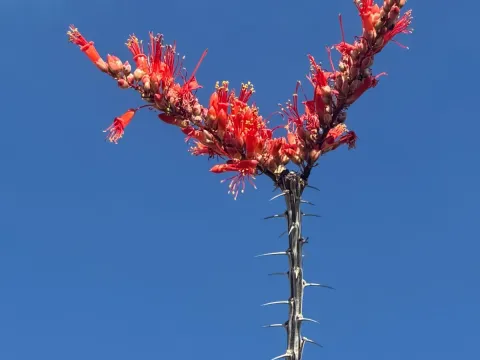
Fouquieria is a genus of succulent trees and shrubs belonging to the Fouquieriaceae family. Native to the arid regions of the Southwestern United States and Mexico, these plants are highly adapted to survive in extreme desert environments with minimal rainfall.
What the section contains


Fouquieria
The primary agronomic requirement for Fouquieria is full sun exposure. These plants thrive under intense direct light, which is necessary to maintain their structural integrity and stimulate their characteristic seasonal flowering.
Regarding soil, Fouquieria demands excellent drainage. The ideal substrate consists of a mineral-heavy mix, such as coarse sand, grit, and volcanic rock, ensuring that water passes through quickly to prevent root asphyxiation.
Climate adaptation is crucial: the plants require warm days and cooler nights to mimic their natural habitat. In a controlled cultivation environment, managing temperature fluctuations is essential for maintaining the plant's metabolic rhythm.
Watering practices should follow a strictly seasonal cycle. During the growing season, deep but infrequent watering is appropriate, while the winter dormancy period requires the soil to be kept almost completely dry to prevent rot.
The most critical threat to Fouquieria is root rot, caused by excessive soil moisture and poor drainage. Once fungal pathogens establish themselves in the root zone, the recovery of the plant becomes nearly impossible.
Mealybugs are the most common insect pests associated with this genus. They typically congregate near the nodes and between the spines, making them difficult to detect and remove without specific systemic treatments.
Spider mites can also be problematic, especially in low-humidity environments. They cause stippling on the succulent stems, which not only looks unsightly but also reduces the plant’s overall photosynthetic efficiency.
Management strategies involve rigorous hygiene in the growing space and the use of pest-specific acaricides or insecticides. It is vital to avoid spraying the foliage heavily to prevent unwanted moisture accumulation.
Preventative care is the best strategy against pests and diseases. Ensuring adequate spacing between plants and maintaining a clean, well-ventilated environment significantly reduces the risk of infestations.