
Fouquieria splendens
Fouquieria splendens
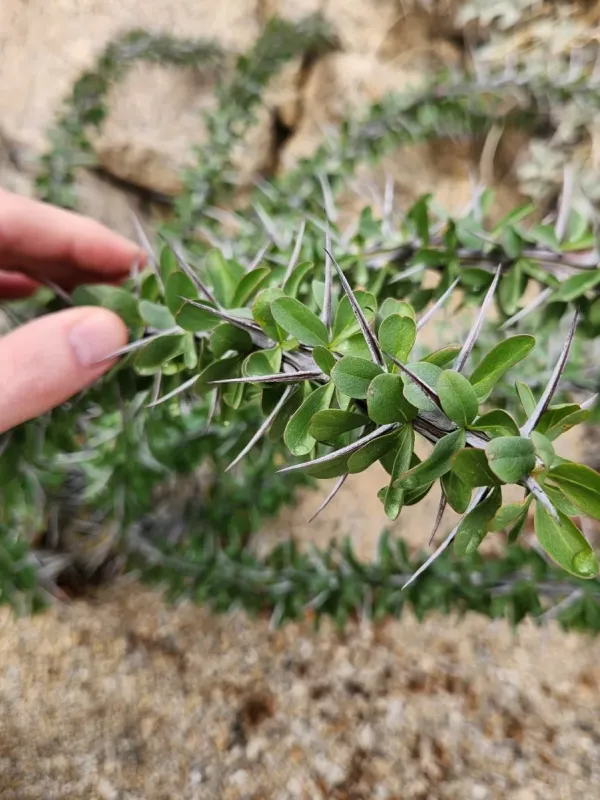
Description
Sowing dates
Propagation of Fouquieria splendens is primarily achieved through seeds, which must be fresh to ensure high germination rates. Sowing should ideally occur in the spring, once temperatures have consistently risen above 20 degrees Celsius.
Seeds should be sown in a highly porous, sandy substrate that mimics the arid soil conditions of its native habitat. A shallow planting depth is recommended to allow the emerging seedlings to develop sturdy root systems quickly.
Consistent moisture is necessary only during the initial germination phase. Once seedlings become established, the water supply must be gradually tapered off to encourage the development of the plant’s natural drought-tolerant physiological mechanisms.
Cuttings are a more complex method of propagation and require significant expertise. They must be allowed to callus over for several weeks in a dry environment before being placed into a rooting medium to prevent rot.
Young plants should be kept in a well-lit location, avoiding direct, harsh afternoon sun for the first few months. Gradual exposure to full sun helps the plant harden off and prevents etiolation of the new shoots.
Growing requirements
Fouquieria splendens, a member of the Fouquieriaceae family, thrives in extremely hot and arid environments. It requires intense, direct sunlight for the majority of the day to maintain its structural integrity and health.
Soil requirements are strict: the medium must have excellent drainage. A mix of coarse sand, perlite, and small gravel is ideal. Water must never be allowed to pool around the base of the plant, as it will rapidly cause crown rot.
The climate should replicate its native desert conditions, featuring low humidity and significant temperature fluctuations between day and night. While it is hardy, it requires protection from prolonged freezing temperatures.
Agricultural management requires a disciplined approach to irrigation. During the growing season, deep but infrequent watering is better than shallow, frequent applications. During dormancy, water should be withheld entirely.
Fertilization should be kept to an absolute minimum, as this species is adapted to nutrient-poor soils. Over-fertilization can lead to weak, succulent growth that is more susceptible to environmental stress and pest attacks.
Main diseases and pests
Root rot remains the most significant threat to the survival of Fouquieria splendens in cultivation. This condition is almost exclusively caused by over-watering or the use of heavy, water-retaining potting mixes.
Pests such as mealybugs and spider mites frequently target the plant in greenhouses or enclosed environments. Routine monitoring of the stems and the base of the spines is essential for catching infestations early.
Fungal infections can develop on wounded stems, particularly if the plant is pruned with dirty tools. Sanitizing all cutting equipment with alcohol is a standard procedure to prevent the spread of localized pathogens.
Environmental stress, such as sudden shifts in light or temperature, can trigger premature leaf drop. While this is often a natural reaction, persistent stress can weaken the plant and make it vulnerable to secondary invaders.
Air circulation is crucial for preventing mold growth during periods of high humidity. Proper spacing between individual plants ensures that adequate airflow is maintained, reducing the risk of respiratory diseases in the plant tissues.