
Fouquieria purpusii
Fouquieria purpusii
Description
Sowing dates
Seeds of Fouquieria purpusii are sown in late spring once stable warm weather is established. Germination requires soil temperatures in the range of 22 to 25 degrees Celsius.
Sowing is carried out in a loose, well-draining sandy substrate that does not retain excess moisture. Seeds should be lightly covered with fine sand, maintaining moderate humidity until the first sprouts appear.
An important condition is the use of freshly harvested seeds, as the viability of this crop decreases significantly over time. Once sprouts appear, it is essential to provide sufficient diffused light to prevent the stems from stretching.
The plant grows extremely slowly; therefore, transplanting seedlings into individual containers should not be attempted until at least a year after sowing. When handling young plants, avoid damaging the root system.
The seed propagation process requires patience and strict adherence to temperature regimes, as sharp fluctuations can lead to the loss of young seedlings.
Growing requirements
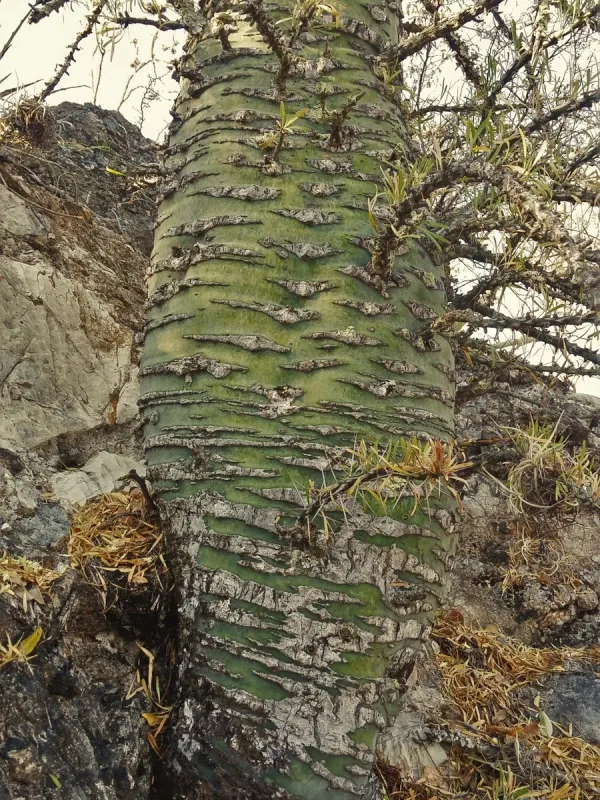
Fouquieria purpusii is a rare shrubby succulent from the Fouquieriaceae family. The plant originates from the arid zones of Mexico, where it grows in rocky deserts and semi-desert environments.
The crop prefers maximum light exposure and direct sunlight throughout the day. In greenhouses or indoor settings, the plant should be placed on south-facing windowsills.
Soil requirements focus on providing perfect drainage: an optimal mixture consists of loam, coarse-grained sand, and fine gravel. Waterlogging near the root collar is fatal to this species.
Watering must be strictly moderate, applied only after the soil ball in the pot has completely dried out. During the winter dormancy period, watering should be almost completely stopped, keeping the plant in a dry and cool state.
Fouquieria is highly drought-tolerant but sensitive to excessive air humidity. Regular room ventilation is recommended to prevent the development of fungal diseases.
Main diseases and pests
The main threat to the crop is root rot caused by poor agricultural practices and waterlogged soil. To prevent this, use copper-based fungicides.
Among pests, the mealybug is the most common on Fouquieria purpusii, hiding in the axils of thorns and young shoots. Weekly inspections for white residue should be conducted.
Scale insects can also damage the leathery tissues of the shoots by sucking cell sap. Pest removal is done manually, followed by treatment with systemic insecticides.
Spider mites pose a risk when the plant is kept in air that is too dry and hot with poor ventilation. Broad-spectrum acaricides are used for their control.
Failure to maintain appropriate winter temperatures, especially exposure to freezing temperatures in combination with high humidity, leads to frostbite and the subsequent death of the aerial parts of the plant.