
Fouquieria columnaris
Fouquieria columnaris
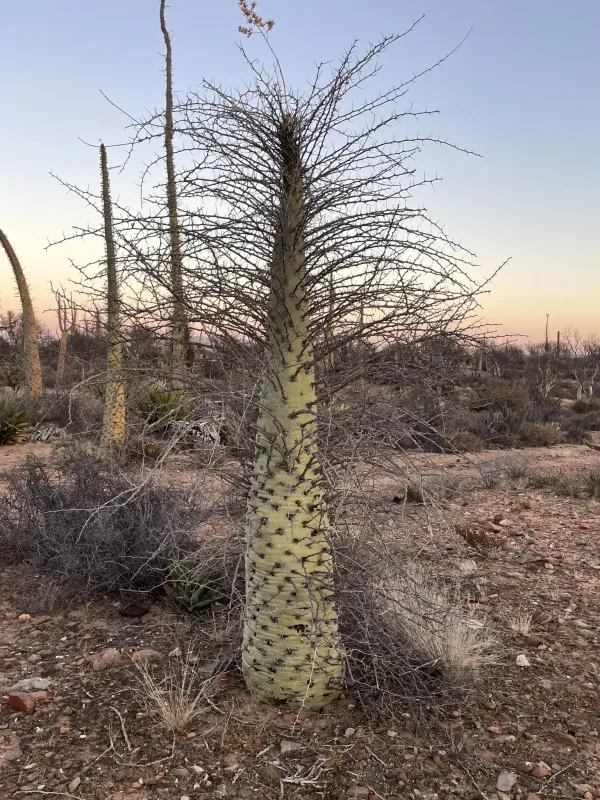
Description
Sowing dates
Propagation of Fouquieria columnaris from seeds requires strict adherence to temperature and humidity conditions during the initial germination phase. Seeds should be sown on a well-drained substrate consisting of sand and perlite, placed on the surface, and lightly covered with soil.
The optimal time for sowing is the spring, when the daylight hours begin to increase, providing natural stimulation for seed germination. The room temperature should be maintained between 22 and 25 degrees Celsius.
Germination can take anywhere from two weeks to a month and a half, depending on the freshness of the seeds. During this period, it is crucial to prevent the top layer of soil from drying out by using the bottom watering method with a tray.
Transplanting seedlings should not be attempted until at least a year after germination, once the root system has strengthened and a sufficient number of true leaves have formed. This species grows extremely slowly, so frequent repotting is not recommended.
When using cuttings, which is less common, the use of phytohormones to stimulate root formation in a sterile sandy environment is necessary for successful rooting.
Growing requirements
Fouquieria columnaris, a member of the Fouquieriaceae family, is native to the arid desert regions of Baja California. The plant possesses a unique ability to adapt to extreme water scarcity by storing moisture within its thick, fleshy, and column-like trunk.
For successful cultivation, maximum sunlight is required, as the plant will quickly lose turgor, stretch out, and lose its iconic decorative shape if kept in shade. Direct sunlight is vital for efficient photosynthesis.
The soil must be exceptionally lean, mineral-based, and have excellent drainage to prevent moisture stagnation around the roots. The use of concentrated organic fertilizers is detrimental to the development of this specific succulent.
The temperature regime should be moderately warm during summer and cool during winter; however, the plant is not frost-tolerant. The critical temperature for the survival of the Fouquieria is around zero degrees Celsius.
During the growing season, watering should be very moderate, and it should be almost entirely withheld during the winter dormancy period to simulate the plant's natural drought cycles.
Main diseases and pests
The primary threat to Fouquieria columnaris is fungal root disease, often caused by overwatering or poor air circulation around the root collar. Stem rot is a common issue that frequently becomes fatal for mature specimens.
Common pests include mealybugs, which infest young shoots and the base of leaf attachments. They extract sap, causing deformation of the trunk and weakening the overall health of the plant.
Spider mites may appear if the air is too dry and stagnant, damaging the epidermis of the plant. Regular ventilation and maintaining proper spacing between pots are recommended as preventative measures.
If pests occur, the use of specialized systemic insecticides is effective, though dosages should be halved compared to those recommended for standard houseplants to avoid chemical stress.
Timely monitoring of the bark and checking for spots on the stem are essential to prevent widespread infection, as the plant recovers extremely slowly from chemical burns or fungal infections.