
Fouquieria fasciculata
Fouquieria fasciculata
Description
Growing requirements
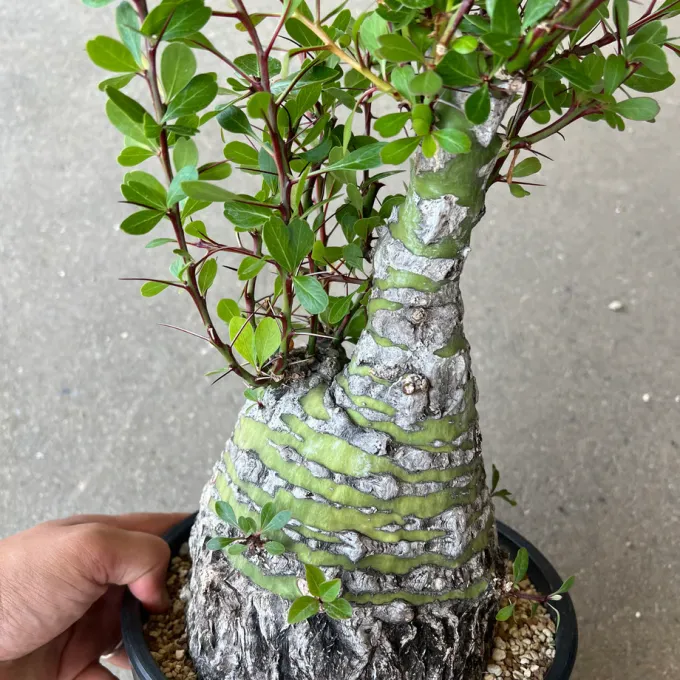
Fouquieria fasciculata is a distinct species within the Fouquieriaceae family, native to the arid and semi-arid regions of central Mexico. This plant is a xerophytic shrub characterized by its pachycaul habit, where the succulent, thickened stems serve as a primary water storage organ.
Botanically, the plant develops an extensive system of thorns derived from leaf petioles, providing protection against herbivores while reducing surface area for transpiration. It exhibits a deciduous growth pattern, dropping its foliage during prolonged dry periods to conserve energy and internal moisture reserves.
Successful cultivation requires high-intensity solar radiation, mimicking the harsh sun of its native desert habitat. Providing direct sunlight throughout the day is essential to maintain a compact, rigid structure and to stimulate the plant's natural growth cycle during the warm season.
The substrate must be highly inorganic, consisting primarily of pumice, perlite, and coarse sand mixed with a minimal amount of organic soil. Proper drainage is non-negotiable; standing water or waterlogged soil will inevitably lead to root rot and failure of the specimen.
Watering strategies must be cyclic, mirroring the arrival of seasonal rains. During the active growth phase, thorough watering is required when the soil has completely dried out. Conversely, the dormant phase requires complete dryness and cool temperatures to prevent premature budding or tissue damage.
Main diseases and pests
The primary agricultural threat to Fouquieria fasciculata is the development of fungal pathogens, particularly within the root collar and basal area, induced by excessive moisture during dormant periods. Poor ventilation exacerbates the risk of stem decay.
Pest management should focus on common succulent pests such as mealybugs and spider mites. These insects thrive in dry, stagnant air conditions and can cause significant damage to the plant's epidermis and tender new growth if not treated with appropriate systemic acaricides or insecticidal soap.