
Vachellia nilotica
Vachellia nilotica (L.) P. J. H. Hurter & Mabb. subsp. nilotica
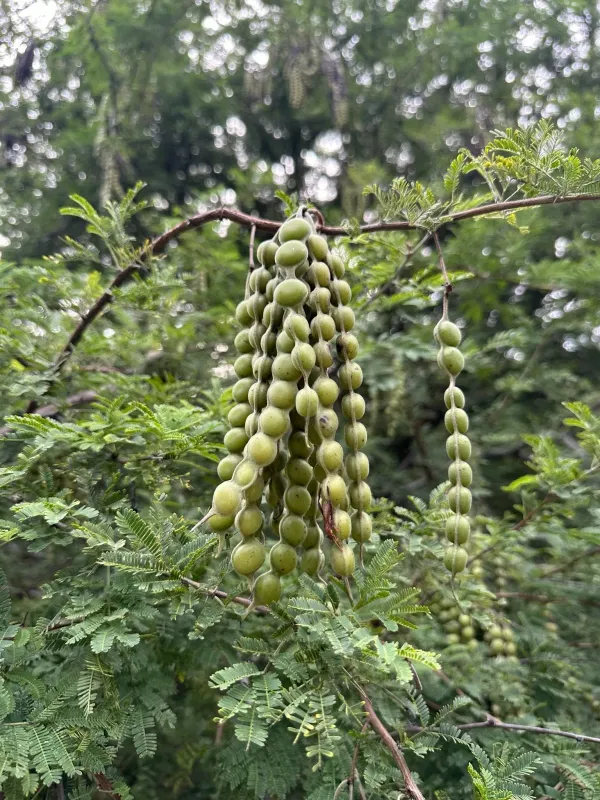
Description
Sowing dates
The propagation of Vachellia nilotica is primarily performed using seeds, which require specific preparation before sowing to ensure uniform germination.
Because the seeds are protected by an extremely hard and impermeable seed coat, manual or mechanical scarification is necessary to allow moisture to penetrate.
In nursery settings, seeds are typically sown at the beginning of the rainy season to provide the necessary moisture for the initial development of the taproot.
Direct seeding in the field is also a common practice in agroforestry, where seeds are planted in prepared spots and lightly covered with soil to protect them from birds.
Early maintenance involves weed control to ensure that seedlings receive enough sunlight and nutrients, preventing competition from fast-growing invasive grasses.
Growing requirements
Vachellia nilotica is a member of the Fabaceae family, highly valued for its extreme drought tolerance and ability to thrive in harsh, arid climates.
The tree prefers deep, heavy clay or alluvial soils that are capable of retaining moisture, although it shows remarkable adaptability to various soil types.
This species is tolerant of saline and alkaline soil conditions, making it an excellent candidate for the reclamation of degraded or marginal lands.
It flourishes in tropical environments with annual rainfall ranges from 300 to 1200 mm, though it can survive extended dry seasons once fully established.
Temperature requirements are high, with an optimal growth range between 25 and 35 degrees Celsius, while frost susceptibility limits its range in cooler regions.
Yield
The timber of the Vachellia nilotica is exceptionally hard, durable, and resistant to termites, making it ideal for rural construction and tool manufacturing.
The bark contains high concentrations of tannins, which are commercially harvested for the leather tanning industry to produce high-quality hides.
Pods and foliage are widely used as a critical source of protein-rich forage for livestock, particularly during the dry season when pastures are scarce.
The gum exudate from the stem is harvested for use as a stabilizer and binder in food processing, pharmaceuticals, and various technical industries.
As a legume, the tree provides significant environmental benefits by fixing atmospheric nitrogen into the soil, thereby improving the fertility of the surrounding landscape.
Main diseases and pests
Seed-boring beetles, particularly bruchid species, pose the most significant threat to the reproductive success of the plant by consuming seeds within the pods.
Defoliating insects can cause significant damage to young saplings, leading to stunted growth or structural deformities in the early stages of development.
Fungal pathogens causing root rot can become problematic if the soil remains waterlogged for extended periods due to poor site selection or inadequate drainage.
Parasitic plants, such as mistletoe, frequently infest the canopy, which leads to a decrease in overall tree vigor and lower yields of seed and biomass.
- Regular monitoring is essential to detect pest outbreaks in early stages.
- Promoting healthy soil drainage prevents most fungal root diseases.
- Sanitary pruning helps mitigate the impact of parasitic plant infections.