
Gorse
Ulex europaeus L.
Description
Growing requirements
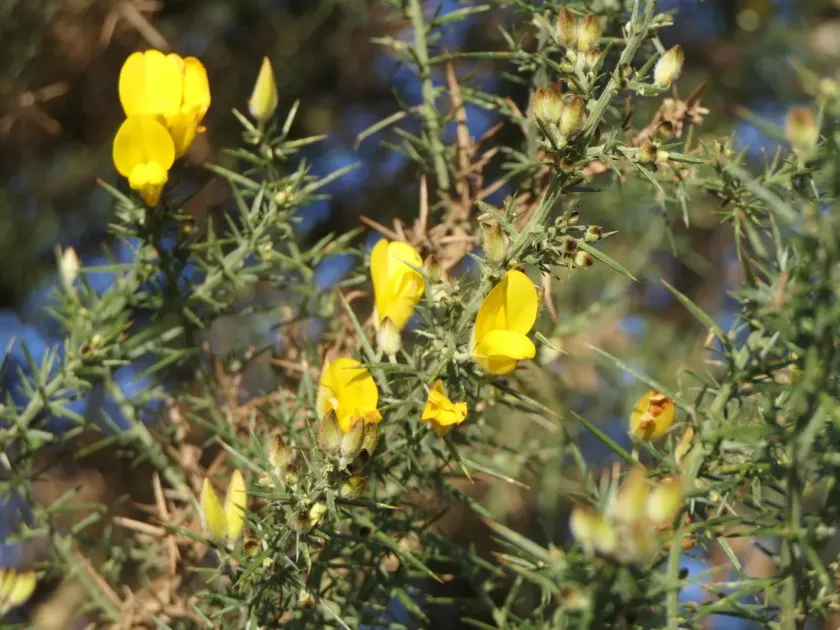
Gorse (Ulex europaeus L.) is a perennial evergreen shrub belonging to the Fabaceae family. It is characterized by dense, spiny stems and bright yellow flowers, often reaching heights of up to 3 meters in optimal conditions.
Originating from Western Europe, gorse is well-adapted to oceanic climates. It exhibits high tolerance to wind and salt spray, making it a common sight in coastal agricultural landscapes.
The plant has minimal soil requirements. It thrives in poor, acidic, and rocky soils where many traditional crops struggle to grow. Its ability to fix atmospheric nitrogen allows it to improve soil fertility over time.
Sunlight is a crucial factor for the development of gorse. It requires full exposure to thrive, as shaded areas lead to weak growth and significantly reduced flowering, which decreases its value as a nectar source.
Agronomic management of gorse involves careful site selection. Due to its aggressive growth habit, it is often planted as a functional perimeter hedge or a barrier to contain livestock within managed pastoral systems.
Yield
Historically, gorse has been utilized as a supplemental forage crop for cattle and horses. When processed through crushing or milling to break its sharp thorns, the young shoots provide a protein-rich green feed.
In modern agricultural practice, gorse is valued for its environmental services, particularly in preventing soil erosion. Its deep and extensive root system binds loose soil, protecting steep gradients and sandy terrains.
The plant serves as a vital early-season nectar source for honey bees. Because it flowers in late winter and early spring, it helps build colony strength during critical periods when other forage is scarce.
There is increasing interest in using gorse as a biomass source for renewable energy. Its woody stems are dense and produce significant heat, making them suitable for specialized bio-fuel applications.
The shrub also acts as an effective windbreak, protecting sensitive agricultural land from prevailing coastal winds and improving the microclimate for nearby pastures.
Main diseases and pests
The seed weevil (Exapion ulicis) is the most prominent specialist pest of gorse. By feeding on the developing seeds, these insects play a biological control role by limiting the plant's spread.
Fungal diseases, such as dieback or rust, can affect gorse, particularly in areas with poor airflow and excessive moisture. Maintaining healthy, spaced-out plants helps minimize the impact of these pathogens.
Management of gorse as an invasive weed typically requires mechanical removal or integrated pest management strategies, as its seeds can remain viable in the soil for several decades.
For sustainable maintenance, it is recommended to avoid excessive use of herbicides, as gorse often provides essential habitat for native wildlife, including birds and beneficial insects.
Periodic monitoring for signs of infestation and ensuring proper site drainage are the best preventative measures to maintain the health and utility of gorse stands in an agricultural context.