
Sphaerophysa
Sphaerophysa
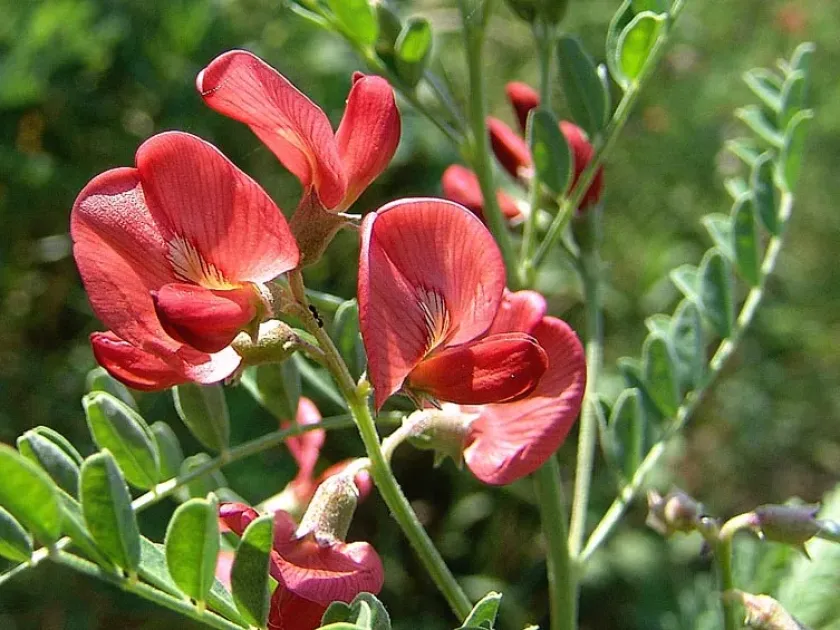
Description
Sowing dates
The planting of Sphaerophysa is typically conducted in the spring season once soil temperatures consistently reach 10–12 degrees Celsius. Ensuring adequate moisture levels in the topsoil is crucial to facilitate uniform germination of the seeds, which possess a hard, protective coat.
Prior to sowing, seed material often undergoes scarification. This mechanical treatment damages the seed coat, significantly improving field emergence rates and ensuring a more synchronized crop establishment across the field.
Seeding rates are determined by the intended end-use of the crop. For biomass production, higher densities are preferred to suppress weeds, while seed multiplication blocks require wider row spacing to facilitate optimal airflow and individual plant development.
The sowing depth is typically maintained between 2 and 4 centimeters, adjusted according to soil texture. Precise depth control prevents seedling weakness and ensures that the emerging plants can reach the surface efficiently.
As a perennial legume, Sphaerophysa exhibits a slow initial growth rate during the first year as it prioritizes root system development. Full biomass potential and stand maturity are typically achieved starting from the second year of cultivation.
Growing requirements
Sphaerophysa belongs to the Fabaceae family and is recognized as a hardy perennial herbaceous plant. Its evolutionary adaptation to arid environments gives it a distinct advantage in regions where soil moisture is a limiting factor.
This crop is highly valued for its tolerance to saline and alkaline soil conditions. It serves as a vital tool in phytoremediation, helping to stabilize and improve degraded landscapes where conventional crops fail to establish.
Climatic requirements favor sunny, open environments. The plant demonstrates high resistance to extreme heat and prolonged droughts, maintaining its physiological functions even under significant environmental stress.
The ideal soil profile includes light, well-draining textures such as sandy loams. The root system is sensitive to waterlogging, making proper field drainage an essential requirement for the long-term success of the crop stand.
Beyond its forage value, Sphaerophysa acts as a soil improver. Through its symbiotic relationship with nitrogen-fixing bacteria, it enhances soil nitrogen content and structure, making it a valuable candidate for sustainable agricultural rotations.
Yield
The biomass productivity of Sphaerophysa is primarily influenced by moisture availability throughout the growing season. Under suitable conditions, it produces a high-quality forage crop rich in essential proteins.
Seed production depends heavily on the presence of insect pollinators, as the plant is entomophilous. Maintaining healthy pollinator populations near the field is a critical agronomic practice for achieving satisfactory seed yields.
The nutritional profile of the harvested biomass makes it a significant resource for livestock feeding. It is particularly effective as a drought-resistant supplement in areas where traditional forage crops cannot survive.
In addition to feed production, Sphaerophysa is utilized as a green manure crop. Its integration into cropping systems aids in rebuilding organic matter and improving the overall fertility of depleted agricultural soils.
Due to its perennial nature, the crop provides stable, multi-year yields. This long-term persistence adds economic value, as it reduces the need for frequent field re-establishment and soil disturbance.
Main diseases and pests
The primary biotic threats to Sphaerophysa include specialized weevil species that attack both the foliage and the seed pods. Integrated pest management strategies are necessary to protect yield potential, especially in seed-production fields.
Fungal diseases, such as root rots, represent a significant threat if the crop is planted in areas with poor drainage or excessive water accumulation. Proper site selection remains the best defense against these pathogens.
Weed pressure is a major concern during the crop's establishment phase. Because early growth is slow, implementing inter-row cultivation or using appropriate pre-emergence controls is essential to prevent competitive species from overwhelming the stand.
Defoliating insects can reduce the photosynthetic surface area during hot summer months. Monitoring field conditions regularly allows for the timely application of control measures if population thresholds are exceeded.
Abiotic factors, including sudden spring frosts during the flowering stage, can lead to localized yield losses. Comprehensive field scouting helps agronomists mitigate risks and adjust management practices throughout the season.
Harvesting
Harvesting for forage is ideally timed during the full bloom phase, when nutrient concentration in the plant tissues is at its peak. This timing ensures the highest protein-to-fiber ratio for livestock consumption.
Seed harvesting should commence once the pods have darkened and seeds have hardened. As the crop may exhibit uneven maturation, fields should be monitored closely to optimize the window for combine harvesting.
Modern harvesting equipment requires careful calibration of cylinder speed to prevent seed coat breakage during threshing. Minimizing mechanical damage is essential for maintaining high germination standards for future seasons.
Once mown, the green mass should be dried thoroughly. In arid climates, this process is rapid, resulting in high-quality hay with preserved vitamin content and palatability for livestock.
Proper storage post-harvest is vital. Seed and forage should be kept in cool, dry conditions with adequate ventilation to prevent moisture accumulation, spoilage, or loss of viability during the storage period.