
Smithia conferta
Smithia conferta
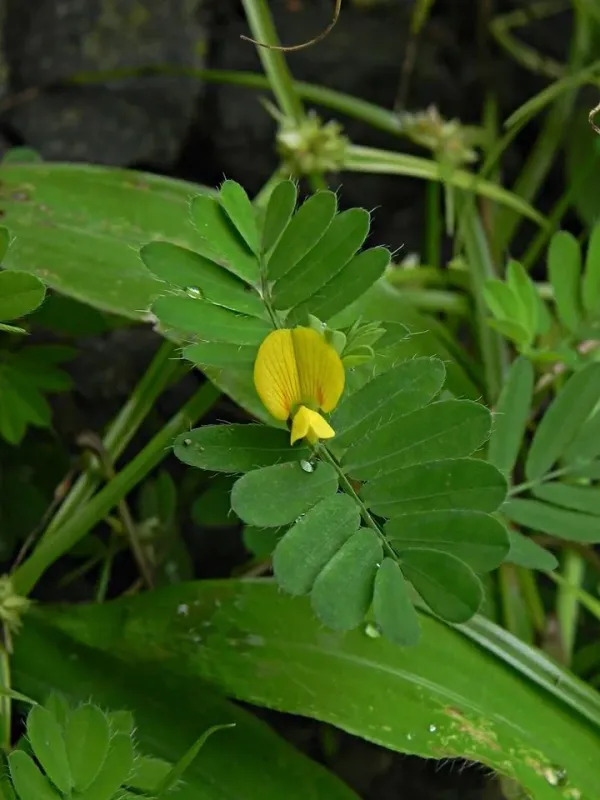
Description
Sowing dates
Smithia conferta is typically sown at the onset of the rainy season, as it requires high moisture levels for successful germination. The seeds need warm soil conditions to establish themselves efficiently.
Row planting is recommended for better canopy management and to allow for easier weeding during the initial development phase. Proper seed depth is crucial to ensure germination occurs without depleting energy reserves.
Temperatures ranging from 20 to 30 degrees Celsius are ideal for the rapid growth of this species. Frost or cold snaps must be completely avoided as the crop is strictly tropical.
Soil should be lightly tilled before sowing to improve aeration and moisture distribution. Ensuring uniform seed distribution helps in creating a dense ground cover that suppresses weeds naturally.
Monitoring the growth during the first few weeks is essential, as the plant establishes its root system and nitrogen-fixing nodules. Weed competition must be kept to a minimum during this time.
Growing requirements
As a member of the Fabaceae family, Smithia conferta excels in nitrogen fixation, contributing significantly to soil enrichment. It is a highly valued crop for sustainable farming systems in tropical regions.
The plant demonstrates remarkable tolerance to waterlogged conditions, frequently thriving in marshy areas or saturated fields. It is specifically adapted to environments with high precipitation.
Full sun exposure is required for optimal biomass production. While it can survive in partial shade, its nitrogen-fixing capabilities and growth rate are maximized under direct sunlight.
It prefers fertile soils but shows resilience in moderately acidic or slightly poor soil types. Good organic matter content in the soil structure promotes better nodulation on the roots.
Proper drainage is helpful, though the plant is notably robust against temporary inundation. It does not perform well in highly saline or desert-like environments due to its moisture requirements.
Yield
The primary use of Smithia conferta is as a green manure crop to increase soil nitrogen levels. The biomass yields are generally high when the crop is allowed to mature under optimal moisture.
It serves as an excellent ground cover, which protects the soil surface from erosion caused by heavy tropical rains. This secondary benefit is critical for land reclamation projects.
As a forage crop, it provides a decent nutritional profile for livestock. However, it is most productive when harvested before the stems become overly fibrous and difficult to digest.
Seed production is consistent, though harvesting can be challenging due to the tendency of the pods to dehisce when dry. Careful timing is needed to capture the maximum seed yield.
Integration into crop rotations enhances the productivity of subsequent crops, such as rice or maize, by providing a steady supply of nitrogenous fertilizer through green manure.
Main diseases and pests
Fungal pathogens are the most significant threat to the crop, especially when humidity levels remain high for extended periods. Root rot is particularly problematic in heavy or stagnant soils.
Insect pests, including various aphids and foliage-feeding caterpillars, can cause significant damage. Regular scouting is essential to identify infestations before they spread across the field.
Cultural control methods such as crop rotation and maintaining adequate spacing are the first line of defense. Avoiding overcrowding helps maintain good airflow and reduces fungal risks.
Chemical intervention should be used cautiously, adhering to integrated pest management principles to protect the environment and local biodiversity. Biological controls are often more effective.
Maintaining healthy soil structure and avoiding compaction can significantly reduce the vulnerability of the plants to root-borne diseases and stress-related issues.
Harvesting
For green manure purposes, the crop should be harvested or incorporated into the soil shortly after the onset of flowering. At this stage, the nitrogen content in the biomass is at its peak.
Mechanical harvesting of the biomass is straightforward using standard forage equipment. If being used as mulch, it can be mowed and left on the field to decompose gradually.
Seed harvesting should occur when the pods turn color and become brittle but before they shatter. A specialized header may be necessary to reduce losses during the harvest process.
Post-harvest residues are valuable for soil structure and should be incorporated into the topsoil to speed up the process of microbial breakdown and humification.
Proper storage of seeds is required, keeping them in a cool, dry place to maintain high viability for the next planting season. Proper drying is key to preventing fungal growth in storage.