
Smithia sensitiva
Smithia sensitiva
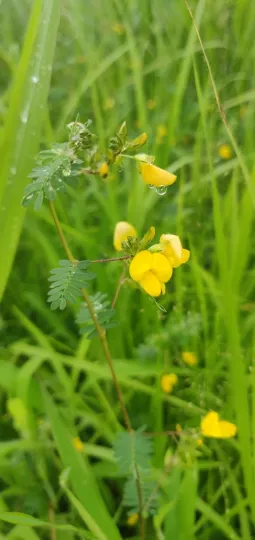
Description
Sowing dates
Smithia sensitiva is an annual legume species belonging to the Fabaceae family. It is predominantly cultivated in tropical and subtropical climates, where seeding is typically timed with the onset of the rainy season to ensure optimal moisture for germination.
Sowing is usually carried out at the end of spring. The seeds are characterized by a hard seed coat, which often necessitates scarification or soaking in water for several hours prior to planting to enhance the rate and uniformity of emergence.
In agricultural settings, the plant is sown as a quick-growing cover crop. The seeding rate is adjusted based on the objective: higher densities are required for green manure applications to ensure a dense stand that effectively suppresses competitive weed growth.
Seeds are sown at a shallow depth of 1 to 2 centimeters. Under favorable soil temperature and moisture conditions, germination occurs rapidly, allowing the plant to establish itself quickly before the peak of the rainy season arrives.
The plant is known for its ability to self-seed. In properly managed agricultural systems, the need for replanting in subsequent years can be minimized, provided that the plant is allowed to reach maturity and disperse seeds naturally after the primary harvest phase.
Growing requirements
This crop is highly demanding in terms of water availability. Smithia sensitiva thrives in moist environments and is commonly found in wetlands, near irrigation canals, or in areas where consistent soil moisture is maintained throughout the growing season.
The plant is photophilic and requires abundant sunlight to maximize photosynthetic activity. While it possesses a degree of shade tolerance, growth rates and biomass production are significantly higher in full sun exposure conditions.
Smithia sensitiva is adaptable to various soil types, though it performs best on alluvial and loam soils. It prefers neutral to slightly acidic soil conditions and does not perform well in highly saline or alkaline environments.
The temperature range is a critical factor for successful cultivation. Being a tropical plant, it does not tolerate cold temperatures or frost. Optimal development is observed in environments where temperatures consistently remain above 15 degrees Celsius.
A notable feature of this species is its capacity to form symbiotic relationships with nitrogen-fixing bacteria. The roots develop nodules that convert atmospheric nitrogen into a form available for plant uptake, making it a valuable tool for soil enrichment.
Yield
The agricultural value of Smithia sensitiva is primarily measured by the volume of green biomass it produces. This biomass is used both for incorporation into the soil to improve fertility and as a nutritional source for livestock.
As a forage crop, it is appreciated for its protein content. Livestock readily consume its foliage, but farmers are advised to manage grazing pressure to ensure the plants can continue to provide adequate cover and organic matter to the soil.
Maximum biomass production is typically achieved just before the peak of the flowering stage. At this developmental phase, the nutrient profile is balanced, making the plant most effective for its designated agronomic purposes.
Seed yield is another significant metric. Under favorable growing conditions, the plant produces a substantial number of pods, which provides a sustainable way for farmers to obtain seeds for future seasons without relying on external suppliers.
By implementing mild fertilization and ensuring consistent water management, producers can increase biomass yields by approximately 20–30 percent, demonstrating the plant's responsiveness to improved agronomic practices.
Main diseases and pests
Smithia sensitiva is generally considered robust, but it can be susceptible to fungal diseases in conditions of poor drainage and waterlogging. Root rot is the most common issue encountered when the soil remains saturated for too long.
Pest pressure is usually manageable, with aphids and certain leaf-feeding insects being the most frequent visitors. These infestations rarely require chemical intervention, as natural biological controls often maintain populations below economic thresholds.
Prevention strategies should focus on proper field preparation, specifically ensuring that the land is leveled to avoid water pooling. Improving soil aeration is key to mitigating the risk of soil-borne pathogens and fungal infections.
In terms of crop rotation, it is advisable to avoid planting Smithia sensitiva in the same plot repeatedly to prevent the buildup of soil nematodes. Rotating with non-leguminous crops helps maintain soil health and pest control.
Weed management in the early stages of growth is essential. Because the plant establishes its canopy relatively slowly, early weed competition can suppress its development, potentially leading to lower overall biomass yields at the end of the season.
Harvesting
For green manure purposes, the crop should be harvested or incorporated into the soil shortly before the flowering phase begins. This ensures that the plant tissue is still tender and decomposes rapidly, releasing nitrogen back into the soil.
When harvesting for hay, the timing must be precise to capture the peak nutrient density while the stems are still supple. Drying should be conducted under controlled conditions to prevent the loss of nitrogen-rich leaves.
Seed harvesting should occur as the pods turn brown. Farmers must monitor the crop closely, as pods are prone to shattering and natural seed dispersal if left in the field for too long after maturity.
After collection, seeds must be thoroughly dried and cleaned of debris to prevent mold growth during storage. Keeping them in a cool, dry, and well-ventilated location is vital for maintaining high germination rates for the following year.
The choice of equipment for harvesting depends on the scale of the operation. Small-scale farmers can manage with simple cutting tools, while larger commercial plots benefit from mechanical mowers that allow for efficient biomass distribution across the field.