
Small-leaf alfalfa
Medicago medicaginoides
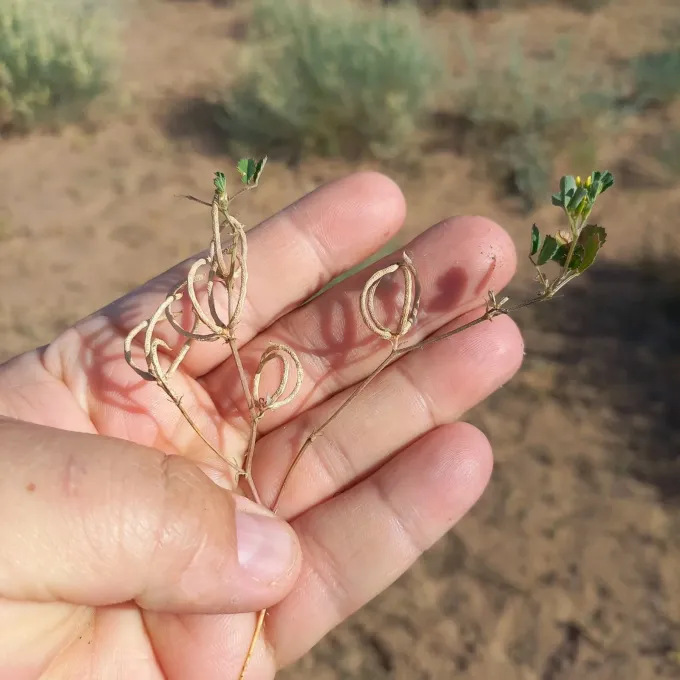
Description
Sowing dates
Small-leaf alfalfa, scientifically known as Medicago medicaginoides, is a perennial legume highly valued for its nutritional profile. Successful establishment requires a well-prepared seedbed that is firm and free from weeds.
The optimal sowing time is early spring, which allows the seedlings to establish a strong root system before the onset of high summer temperatures. Seeds should be sown at a depth of approximately 1 to 2 centimeters.
Seeding rates typically range from 12 to 15 kilograms per hectare depending on the method used. Drilled sowing is generally preferred over broadcasting to ensure uniform emergence and consistent stand density.
Inoculation with appropriate nitrogen-fixing bacteria is recommended if the field has not hosted legumes recently. This practice enhances the plant's ability to fix atmospheric nitrogen effectively.
Post-emergence management focuses on maintaining soil moisture during the first few weeks. Young plants are sensitive to water stress until their taproot system has developed sufficiently.
Growing requirements
This crop thrives in well-drained, fertile soils with a pH between 6.5 and 7.5. It is intolerant of waterlogged conditions and heavy clay soils, which can lead to root rot and diminished plant vigor.
Alfalfa is renowned for its deep taproot, which provides excellent drought tolerance. Once established, it can access deep subsoil water, making it a reliable crop in arid or semi-arid regions.
Full sun exposure is critical for the development of high-quality foliage. Sites with poor light penetration should be avoided, as they significantly increase the risk of disease and lodging.
Moderate temperatures are ideal, though the crop is hardy and can withstand significant seasonal fluctuations. Proper fertilization, particularly with potassium and phosphorus, supports seasonal regrowth.
Soil aeration is essential for optimal performance. Practices such as subsoiling, if the field is compacted, can greatly benefit the crop's longevity and biomass production over several years.
Main diseases and pests
Common diseases affecting the plant include leaf spot and powdery mildew, which are more prevalent in humid conditions. Managing stand density helps improve airflow and reduces disease incidence.
Pests like alfalfa weevil and aphids pose a significant risk to yield potential. Regular field scouting is necessary during the vegetative growth stages to determine the need for intervention.
Root-knot nematodes can cause stunted growth in infested fields. Maintaining a diverse crop rotation is a primary defense mechanism to prevent the buildup of soil-borne pathogens and pests.
Insects that damage the terminal buds can significantly reduce forage quality. Biological controls and the introduction of beneficial predatory insects are effective strategies in an integrated pest management plan.
Ensuring proper harvesting schedules helps mitigate pest pressure. Removing the biomass in a timely manner disrupts the life cycles of several common foliage-feeding pests.