
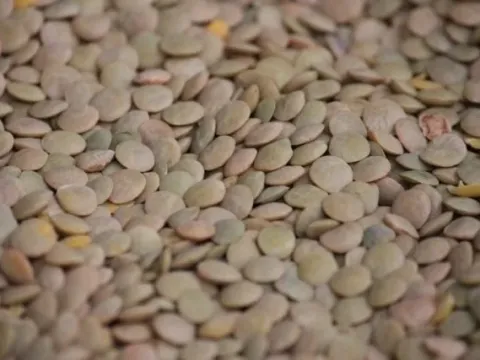
Lentil
Lens
Lentil (Lens) belongs to the Fabaceae family and is a globally significant pulse crop. It is typically sown in early spring as soon as the soil is workable, usually when temperatures reach 5-6 degrees Celsius.
What the section contains


Lentil
The seeding rate is generally between 1.5 to 2.5 million viable seeds per hectare. Planting depth varies from 3 to 5 centimeters, depending on soil moisture levels and seed size.
Row spacing is usually kept at 15 centimeters to allow for adequate plant development. Careful sowing ensures uniform crop density, which is critical for competing against early-season weeds.
In regions with mild climates, some farmers opt for early spring or even late autumn planting to utilize available soil moisture. Proper germination is the key to a successful start for this crop.
Post-seeding compaction of the soil is recommended to ensure good seed-to-soil contact. This practice promotes faster germination and a more uniform stand, reducing the risk of gaps in the field.
Lentils thrive in light, well-drained loamy or sandy soils with a neutral pH level. They perform poorly in heavy clay soils or areas prone to waterlogging, which can cause root damage.
The crop is relatively cold-tolerant during early stages but requires moderate temperatures between 17 and 22 degrees Celsius during the flowering and pod-filling phases.
Sunlight exposure is essential for lentil growth, as the plant needs sufficient solar energy for optimal development. It is sensitive to weed competition, particularly during the first few weeks after emergence.
Crop rotation is vital; lentils should not follow other pulses to avoid the buildup of soil-borne pathogens. Good preceding crops include cereal grains that leave the field clean.
Balanced nutrient management, particularly with phosphorus and potassium, helps improve seed quality. Nitrogen fertilization is rarely needed as the plant fixes atmospheric nitrogen through rhizobia.
Average lentil yields range from 15 to 25 decitons per hectare, depending on variety and environmental conditions. High-tech farms with irrigation can achieve even higher outputs.
Optimal plant density and clean fields are the primary drivers of high productivity. Managing weeds efficiently during the vegetative stage is essential for meeting yield goals.
The choice of high-yielding, regionalized varieties significantly impacts the harvest outcome. Modern breeding has produced plants with better resistance to lodging and pod shattering.
Micronutrient application, specifically molybdenum and boron, can improve nodule activity and increase total biomass. These inputs often pay off in significantly higher grain production.
Timely harvest is critical to prevent yield loss from pod shattering. Monitoring fields during the maturation stage allows producers to schedule harvest operations effectively.
The most significant diseases for lentils include ascochyta blight, fusarium wilt, and anthracnose. These pathogens spread rapidly under high humidity and excessive rainfall conditions.
Key insect pests include the lentil weevil, aphids, and lygus bugs. These pests can cause extensive damage to pods and seeds, significantly reducing both quality and market value.
Integrated Pest Management (IPM) is the standard approach, combining seed treatments with timely foliar applications. Monitoring is the best tool for preventing localized outbreaks.
- Crop rotation intervals of 4-5 years to break disease cycles.
- Use of certified, disease-free seed stock.
- Fungicide application during the early flowering phase.
Post-harvest storage management is also vital to prevent weevil infestations. Drying the grain to safe moisture levels is the first step in long-term protection.
Lentil harvesting begins when the pods turn a characteristic brown color and the seeds rattle inside. Moisture content at harvest should ideally be around 15-18 percent.
Direct combining is common, provided the crop is even in maturity. Using specialized low-cutting headers minimizes losses, as some pods are often located near the ground.
Field conditions should be dry to prevent staining or damage to the seeds. Cutting during the cooler hours of the day can also reduce the risk of shattering.
Immediate cleaning and drying are essential after harvest to ensure grain stability. Reducing moisture to 13-14 percent prevents heating and mold development in storage bins.
Proper storage in a cool, ventilated environment ensures the shelf-life and marketability of the product. Protecting the crop from rodents and pests remains a priority throughout storage.