
Dalbergia rimosa
Dalbergia rimosa
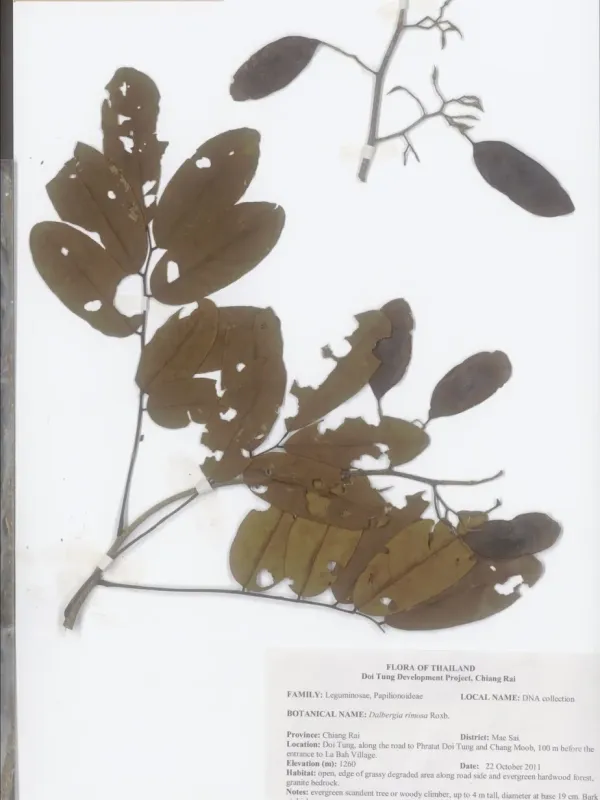
Description
Growing requirements
Dalbergia rimosa is a plant species belonging to the Fabaceae family. This tree is native to the tropical regions of South-East Asia, where it thrives in diverse forest environments.
The species requires a humid tropical climate to reach its full development potential. It typically favors deep, well-drained loamy soils that provide a stable environment for its extensive root system.
Botanically, it is characterized by its woody growth habit and specific leaf structure typical of the Dalbergia genus. The tree requires significant sunlight to maintain active biomass production.
Soil management practices should focus on maintaining natural organic matter levels. Excessive moisture retention in the soil can lead to root pathogens, thus proper site selection is critical.
Agrotechnical maintenance includes monitoring for canopy health and ensuring that young trees are not suppressed by faster-growing vegetation in the early stages of establishment.
Harvesting
Dalbergia rimosa is primarily valued for its high-quality timber. The wood is noted for its durability and aesthetic appeal, making it a desirable resource for furniture making and cabinetry.
The harvesting process involves systematic logging of mature specimens. This requires careful coordination to ensure the longevity of the plantation and the sustainability of timber output.
Post-harvest processing involves seasoning the timber to reduce moisture content, which is a crucial step to prevent warping and ensure the structural integrity of the final products.
The economic value of this crop is tied to the global demand for exotic hardwoods, which necessitates adherence to strict quality control during the production and cutting phases.
Sustainable forest management practices are essential to balance the industrial harvesting of the species with the preservation of local forest biodiversity.