
Pieris hybrid
Pieris hybrids
Description
Growing requirements
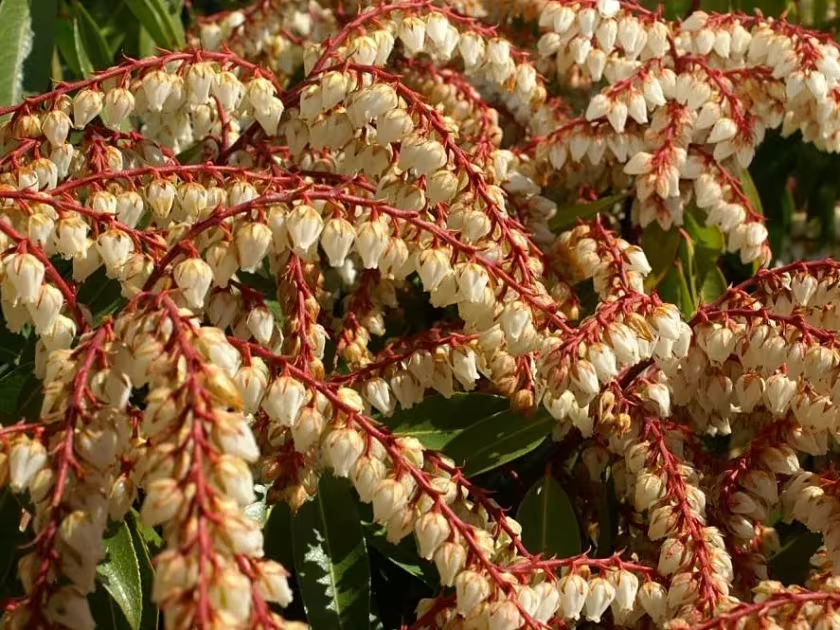
Pieris hybrid is a distinguished evergreen shrub belonging to the Ericaceae family, widely appreciated for its ornamental foliage and pendulous flower clusters. It is an excellent choice for landscape design, offering interest throughout the entire year.
The plant requires acidic, well-draining soil rich in organic matter. Gardeners must ensure the pH level remains between 4.5 and 5.5. In neutral or alkaline soils, the plant will struggle to absorb nutrients, leading to yellowing of leaves and eventual decline.
Site selection is crucial: Pieris performs best in light shade or sheltered spots with filtered sunlight. Harsh afternoon sun can scorch the glossy leaves, while deep shade often results in a leggy growth habit and reduced floral display.
Moisture management is key to successful cultivation. The root system is relatively shallow and sensitive to drought. Applying a layer of pine bark mulch around the base helps retain soil moisture and naturally maintains the necessary acidity.
Pruning should be performed immediately after the flowering period. This promotes denser branching and prevents the shrub from becoming overgrown. It is important to sanitize tools to prevent the transmission of diseases between plants.
Main diseases and pests
Spider mites are the most common pests affecting Pieris, especially during warm and dry periods. They create fine webbing on the undersides of leaves, causing them to appear stippled and lose their vibrant color over time.
Lace bugs are another significant threat, as they feed on the leaves, leaving behind dark, spotted excrement and causing leaf chlorosis. If left unmanaged, the plant may suffer from severe defoliation and weakened vigor.
Phytophthora root rot is a major disease risk for Pieris, particularly in waterlogged or heavy clay soils. Ensuring proper drainage at the time of planting is the most effective way to protect the plant from this deadly fungal infection.
Leaf spot infections occur under high humidity, especially when there is poor air circulation within the canopy. Improving airflow by selective pruning and avoiding overhead watering can significantly reduce the risk of outbreaks.
Integrated pest management, including regular monitoring and the use of horticultural oils, is the best defense. Avoid using strong chemical pesticides unless absolutely necessary to preserve the health of beneficial insects in the garden ecosystem.