
Mountain fetterbush
Pieris floribunda
Description
Growing requirements
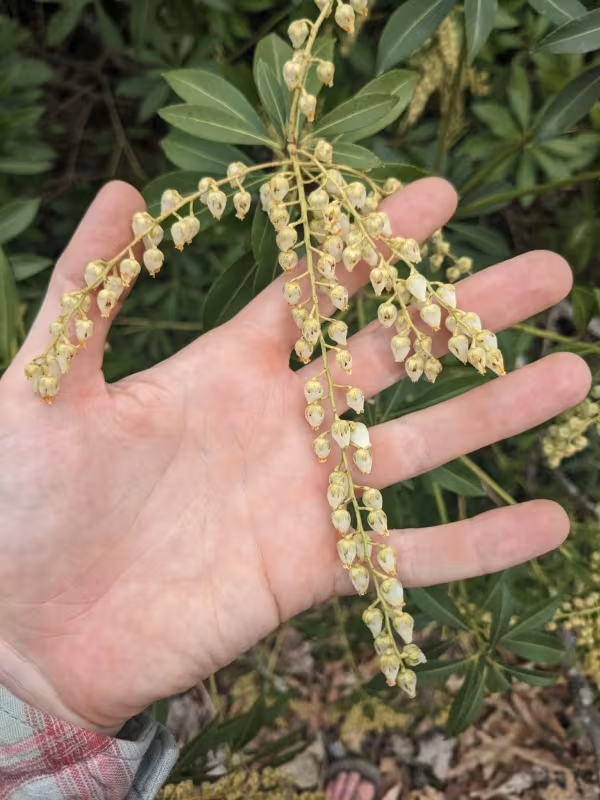
Mountain fetterbush (Pieris floribunda) is an evergreen ornamental shrub belonging to the Ericaceae family. Native to the southeastern United States, it is widely appreciated for its upright panicles of white, lily-of-the-valley-like flowers.
This species requires acidic, well-drained soil rich in organic matter. An ideal pH range is between 4.5 and 5.5. In alkaline conditions, the plant will quickly develop nutrient deficiencies, particularly iron chlorosis.
Pieris floribunda thrives in partial shade. While it can tolerate more sun in cooler, northern climates, intense midday exposure often results in leaf scorch, especially when the root zone is dry.
Consistent soil moisture is essential for this plant. Irrigation should be performed using soft water, as tap water with high mineral content can gradually increase soil alkalinity, harming the plant's health.
Applying a 5–10 cm layer of mulch, such as pine bark or acidic compost, is a standard agricultural practice. This mimics the plant's natural woodland environment, conserves soil moisture, and protects shallow roots from frost.
Main diseases and pests
The Andromeda lace bug is the most significant pest affecting Pieris. These insects feed on the underside of leaves, causing yellow stippling and eventual leaf drop. Integrated pest management using systemic insecticides is often required.
Phytophthora root rot is a major disease threat associated with poor drainage. Once a plant is infected, the roots decay, and the shrub begins to wilt and die. Prevention relies entirely on selecting well-draining planting sites.
Leaf spot diseases caused by various fungi can occur during periods of prolonged high humidity. Improving airflow around the plant canopy by selective pruning is the primary method to mitigate the spread of these pathogens.
Iron deficiency, appearing as interveinal chlorosis, is common when the soil environment shifts away from the acidic range. Providing chelated iron supplements and strictly maintaining acidity levels can reverse these symptoms.
Regular monitoring of foliage during the growing season is necessary to detect early signs of infestation. Prompt removal of damaged leaves and the application of fungicides help maintain the plant's structural and aesthetic integrity.