
Kyllinga
Cyperus kyllingiella
Description
Growing requirements
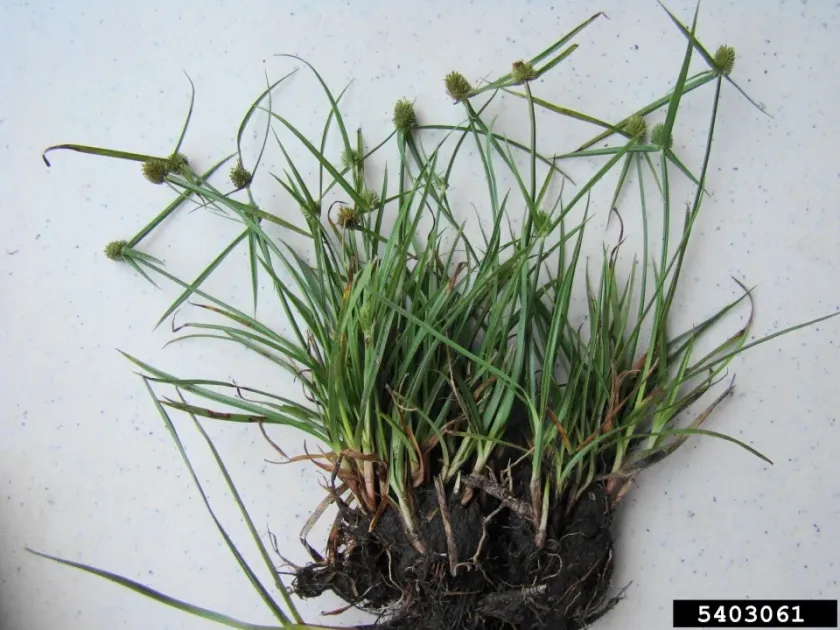
Kyllinga (Cyperus kyllingiella) is a significant perennial herbaceous plant belonging to the Cyperaceae family. It is morphologically characterized by its triangular stems and distinct inflorescences, often found in dense clusters, which differentiate it from standard grasses and other similar species in the sedge family.
Originating from tropical and subtropical regions, Kyllinga has successfully colonized various environments globally. It is particularly prevalent in wetlands, riverbanks, and areas with high humidity, making it a common sight in irrigated landscapes and poorly drained agricultural plots where it thrives alongside rice.
The plant demonstrates strict requirements for its habitat, preferring nutrient-rich, moist soils. It is highly adaptive to fluctuations in water tables, meaning it can survive periodic flooding that would be detrimental to many conventional crop species, thus giving it a competitive advantage in wetland agriculture.
Botanically, Kyllinga is defined by its robust rhizomatous root system, which allows for rapid vegetative propagation. This underground network ensures that the plant can survive adverse conditions and quickly recover after mechanical disruption, making it a challenging species to manage in a field setting.
While some members of the Cyperus genus are utilized for fiber or medicinal purposes, Kyllinga is predominantly managed as a weed. Its rapid growth cycle and nutrient uptake capability mean that it requires careful site management to prevent it from outcompeting primary food or fiber crops for vital resources.
Main diseases and pests
The primary threat posed by Kyllinga in an agricultural context is its aggressive competitive behavior. It rapidly absorbs water and nitrogen from the soil, depriving nearby crops of these essential resources, which frequently results in significant yield reductions and diminished crop quality at harvest time.
As a reservoir for various plant pathogens, Kyllinga can host viruses and bacteria that affect more vulnerable agricultural crops. Because it is highly resistant to many common diseases, it can act as an asymptomatic carrier, spreading infection throughout a field via insect vectors or physical contact.
Pest management for Kyllinga is complicated by its physiological robustness. While certain insects like weevils may target the plant, they are rarely sufficient to control large infestations. This necessity for human intervention often involves the use of high-efficacy systemic herbicides tailored to specific growth stages.
Mechanical control techniques, such as tilling or harrowing, are often counter-productive if not performed with high precision. Breaking the rhizomes without fully removing them can stimulate new shoots, effectively increasing the population density of the weed rather than eliminating it from the field.
For effective management, agricultural experts suggest an integrated approach that focuses on soil drainage improvements and the cultivation of competitive cover crops. These methods create unfavorable conditions for Kyllinga, effectively shading it out and suppressing its ability to colonize large, open agricultural spaces.