
Three-way sedge
Dulichium arundinaceum
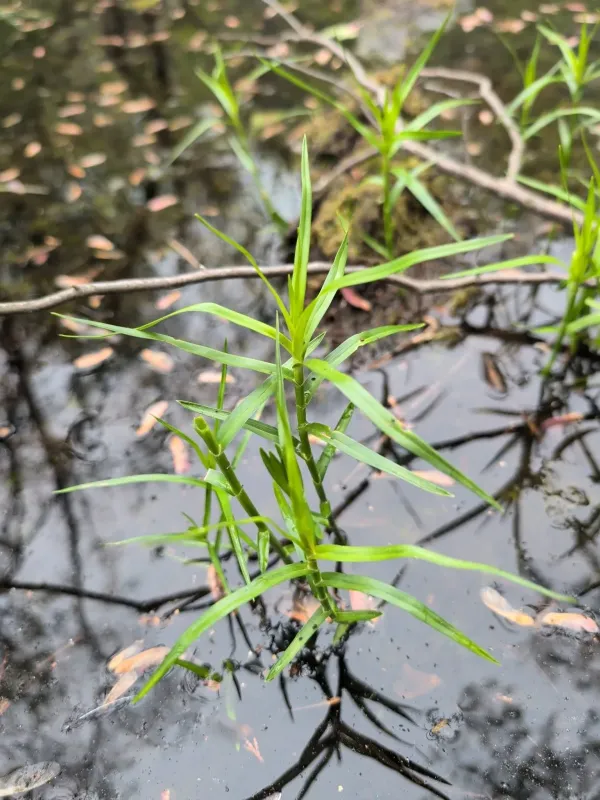
Description
Sowing dates
Dulichium arundinaceum is primarily propagated through the division of its creeping rhizomes, which should be performed during the early spring growth phase.
Seed propagation is possible, but seeds require a cold stratification period to break dormancy and ensure consistent germination rates in the following season.
The ideal time for planting divisions is mid-to-late spring, once the water temperature has risen sufficiently to support root establishment in the substrate.
When planting, ensure the rhizomes are firmly anchored in the aquatic soil at a depth that prevents them from being dislodged by water fluctuations.
Maintaining proper spacing is crucial, as the plant spreads laterally through vigorous rhizomes, eventually creating dense colonies that occupy available space.
Growing requirements
Dulichium arundinaceum, a member of the Cyperaceae family, is a perennial aquatic plant native to North American wetlands and marshy environments.
The species requires consistently saturated soil or shallow standing water, typically thriving in water depths ranging from 5 to 20 centimeters.
It prefers full sun to light shade conditions, showing robust growth when provided with high light intensity throughout the long summer days.
The soil should be nutrient-rich, acidic to neutral, and capable of holding moisture without becoming overly stagnant or anaerobic for extended periods.
The plant demonstrates significant winter hardiness, provided the rhizomes remain protected beneath the frost line within the water or wet substrate.
Main diseases and pests
Fungal leaf spot diseases may occur in stagnant environments where humidity is high and airflow across the leaf surface is significantly restricted.
Root rot pathogens pose a threat if the water quality is poor or if excessive organic decay occurs around the base of the plant in the substrate.
Various insect pests, including aphids and leaf-eating beetles, can occasionally infest the foliage during periods of environmental stress or heat.
Invasive algae blooms can create severe competition for nutrients, ultimately shading out younger shoots and slowing the maturation of the colony.
- Monitoring for discoloration on leaves and stems.
- Implementing physical barriers to manage colony size.
- Using water-safe practices to maintain clean aquatic conditions.