
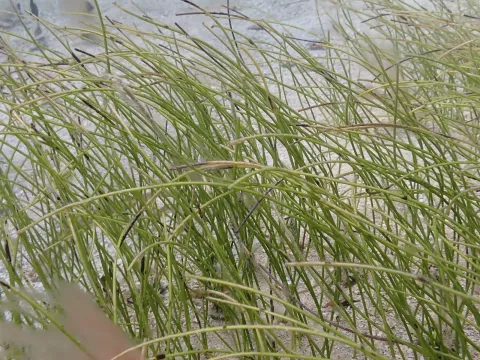
Syringodium
Syringodium
Syringodium is a genus of marine flowering plants belonging to the Cymodoceaceae family. Known commonly as manatee grass in some regions, it is characterized by its cylindrical, needle-like leaves that are highly adapted to submerged life.
What the section contains

Syringodium
The plant is native to tropical and subtropical coastal waters, spanning across the Caribbean, the Gulf of Mexico, and parts of the Indo-Pacific. It flourishes in clear, shallow waters where sunlight penetration is sufficient for consistent photosynthesis.
Environmental conditions require a stable sandy or carbonate-rich substrate to support the extensive rhizome network. The water temperature must remain warm throughout the year, typically between 20°C and 30°C, to ensure optimal metabolism.
Salinity levels are crucial for the health of Syringodium, as it is a stenohaline organism that thrives in full-strength seawater. It is generally intolerant of prolonged freshwater influxes which can damage its cellular structure.
The growth rate and density of these meadows depend heavily on nutrient cycling in the sediment. The plant effectively traps suspended particles, which promotes the accumulation of organic matter around its root system.
The primary threat to Syringodium meadows is the degradation of water quality caused by runoff from coastal development and agriculture. Excess nitrates lead to the overgrowth of macroalgae that suffocate the seagrass.
Physical damage from boat propellers and anchoring causes severe fragmentation of the meadow patches. Because the plant relies on vegetative growth, recovery from these scars is notoriously slow and difficult.
Climate change poses a systemic risk, as rising ocean temperatures increase the frequency of marine heatwaves. Such events can trigger mass mortality of the seagrass, which lacks the rapid dispersal mechanisms to colonize new areas.
Disease outbreaks, such as seagrass wasting disease caused by labyrinthulid protists, can decimate large areas of Syringodium. These pathogens thrive in stressed conditions caused by suboptimal water temperatures or pollution.
Invasive marine species and shifts in herbivore populations can alter the balance of the ecosystem. Overgrazing by certain sea urchin populations, when predators are absent, can lead to the total collapse of local Syringodium stands.