
Oregon manroot
Marah oreganus
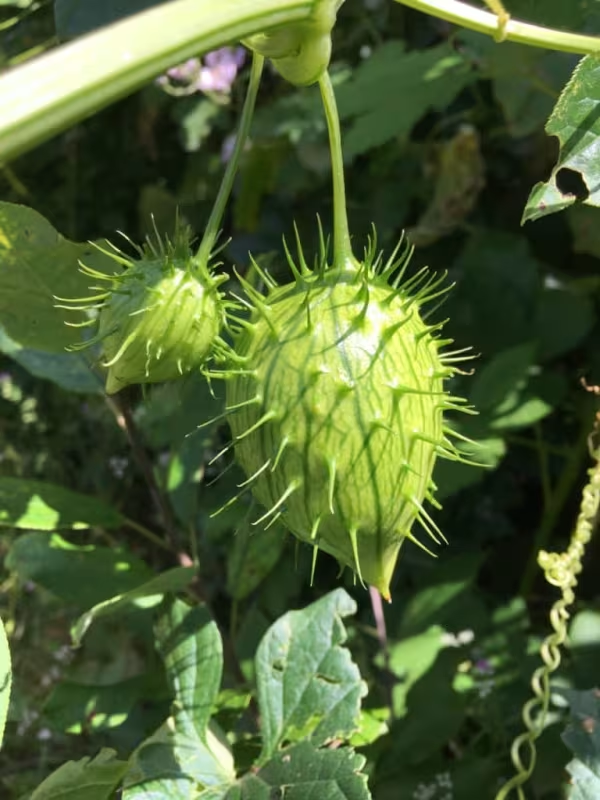
Description
Growing requirements
Oregon manroot (Marah oreganus) is a vigorous perennial vine belonging to the Cucurbitaceae family. Native to the Pacific Coast of North America, it is primarily found in canyons and coastal scrub environments where it thrives in moist but well-draining conditions.
The defining characteristic of this plant is its massive, tuberous root system, which can grow to immense sizes. This underground storage organ acts as a reservoir for nutrients and water, enabling the vine to produce rapid, extensive growth each spring after winter dormancy.
For successful cultivation, the plant requires fertile, sandy or loamy soils with excellent drainage. It is imperative to avoid waterlogged locations, as the large tuber is highly susceptible to rot if exposed to standing water for extended periods of time.
The plant demonstrates significant flexibility in terms of light exposure, performing well in both full sun and partial shade. However, in regions with intense summer heat, light afternoon shade is recommended to prevent leaf scorching and to maintain the plant's aesthetic appeal.
Economically, the species is primarily utilized as a dramatic ornamental climber capable of covering fences or trellises quickly. Additionally, the saponins found within its tissues have a long history of traditional use as natural surfactants, making it an object of interest for ethnobotanical research.
Main diseases and pests
Powdery mildew is the most prevalent disease affecting the foliage of Oregon manroot, especially when humidity levels remain high for extended periods. Promoting good airflow through the canopy by using sturdy, elevated trellises is the best cultural practice for disease mitigation.
Root and crown rot represent significant threats to the long-term health of the plant, often resulting from improper watering schedules or poor soil aeration. Maintaining a consistent moisture level without saturated conditions is essential for protecting the plant's vital tuberous structures.
Aphids and spider mites are the most common pests found on the vine, often congregating on the undersides of leaves or tender new growth. Early detection is key, and simple mechanical removal or natural insecticidal soaps can often manage small outbreaks effectively.
Soil-borne nematodes can pose a hidden threat, causing stunted growth and general decline in the plant's health. Integrating organic matter into the soil and avoiding the planting of other cucurbits in the same space can help manage nematode populations naturally.
Slugs and snails can cause substantial damage to young shoots during the early spring growth phase. Protecting the base of the plant with copper strips or diatomaceous earth is a highly effective way to prevent these pests from reaching and destroying developing foliage.