
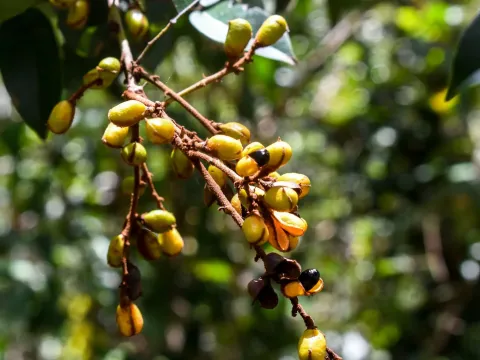
Connarus
Connarus
Connarus is a diverse genus of woody vines, shrubs, and small trees belonging to the family Connaraceae. These plants are native to tropical regions across Asia, Africa, and the Americas, often found in humid tropical forests and woodland areas.
What the section contains


Connarus
Successful cultivation of Connarus requires a warm, tropical climate. The plant is highly sensitive to cold temperatures and cannot tolerate frost, which limits its outdoor production to tropical latitudes or protected environments such as greenhouses.
The ideal soil conditions for Connarus include nutrient-rich, well-draining substrates with high organic content. The soil should be slightly acidic to neutral to ensure optimal nutrient uptake and to prevent the risk of root rot from waterlogging.
As a climbing vine, Connarus needs structural support to achieve its full potential and proper growth habit. In its natural habitat, it utilizes larger trees as support to climb toward dappled sunlight in the canopy, a behavior that should be replicated in cultivation.
Agricultural management requires consistent soil moisture and high humidity levels. The plants are sensitive to sudden environmental fluctuations; therefore, maintaining stable growth conditions is essential for vegetative health and plant vigor.
In tropical environments, Connarus is susceptible to various pests, including spider mites and scale insects. These pests thrive in high-humidity environments and can cause significant leaf damage if not monitored regularly.
Fungal diseases are a primary threat, often triggered by poor air circulation and excessive watering. Root rot is particularly dangerous, as it can kill the plant quickly if the drainage is insufficient.
Mechanical damage during maintenance can also expose the plant to pathogens. Using sterilized tools for pruning and avoiding injury to the stems is crucial for preventing infection and promoting recovery.
Management of pests and diseases relies on a combination of cultural practices, such as maintaining good airflow, and the strategic use of biological control agents or targeted pesticides when necessary.
Overall, keeping the plant in a state of high physiological vigor through balanced nutrition and proper environmental control is the best defense against both common pests and opportunistic pathogens.