
Nitella capillaris
Nitella capillaris
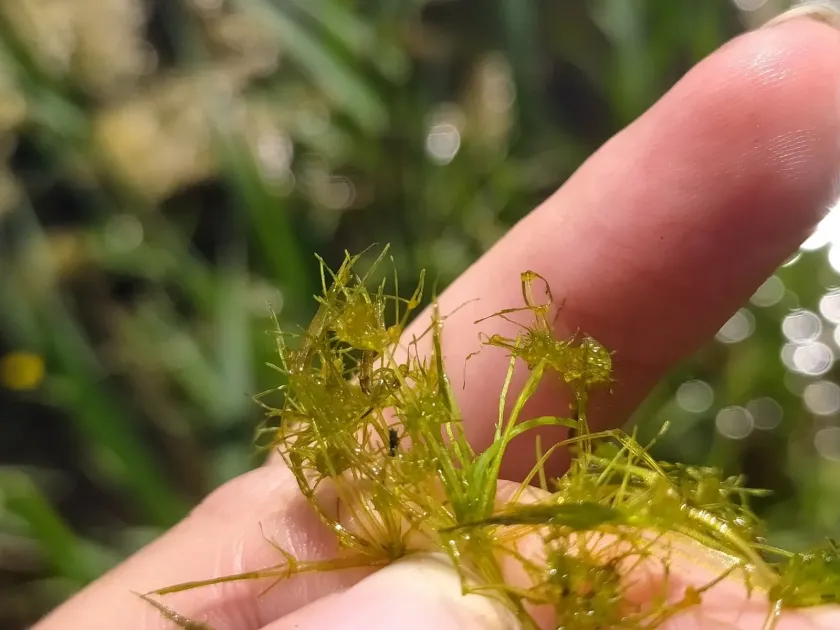
Description
Growing requirements
Nitella capillaris is a macroscopic freshwater alga belonging to the Characeae family. It is characterized by a complex whorled structure that mimics higher plants, consisting of nodes and internodes that provide structural support within the water column.
The species requires clear, stagnant, or slow-moving water bodies to thrive. It is highly sensitive to water quality and serves as an excellent natural indicator of clean, oligotrophic, or slightly mesotrophic freshwater ecosystems.
Regarding soil and substrate, it prefers mineral-rich sandy or silty bottoms. It does not tolerate high levels of organic decay, which can lead to localized anaerobic conditions detrimental to the plant's delicate rhizoid system.
Optimal growth depends on alkalinity and sufficient light penetration. In aquatic environments, it acts as a primary producer, contributing significantly to oxygen production and providing essential habitats for microfauna and juvenile aquatic organisms.
Agricultural and scientific use involves the study of cytoplasmic streaming and its potential in phytoremediation, as Nitella species are known to sequester excess nutrients and heavy metals from the aquatic environment.
Main diseases and pests
The primary threat to Nitella capillaris is water pollution, particularly nutrient runoff from agricultural lands. Excess phosphorus and nitrogen stimulate the overgrowth of phytoplankton, which blocks light and leads to the decline of Nitella colonies.
Siltation of aquatic habitats is another major risk factor. Sediment accumulation covers the plant, inhibiting its ability to anchor and perform photosynthesis, eventually leading to the death of the colony.
Epiphytic algal growth, often caused by nutrient imbalance, can smother the Nitella, preventing gas exchange and nutrient absorption across its cell walls, which are sensitive to external pollutants.
Herbivorous aquatic animals, such as certain species of snails and specialized fish, can significantly impact populations if their density exceeds the ecosystem's carrying capacity.
Hydrological disturbances, such as drastic changes in water levels or thermal pollution from industrial sources, can irreparably damage the habitat, as this species is adapted to relatively stable environmental conditions.