
Honckenya peploides
Honckenya peploides
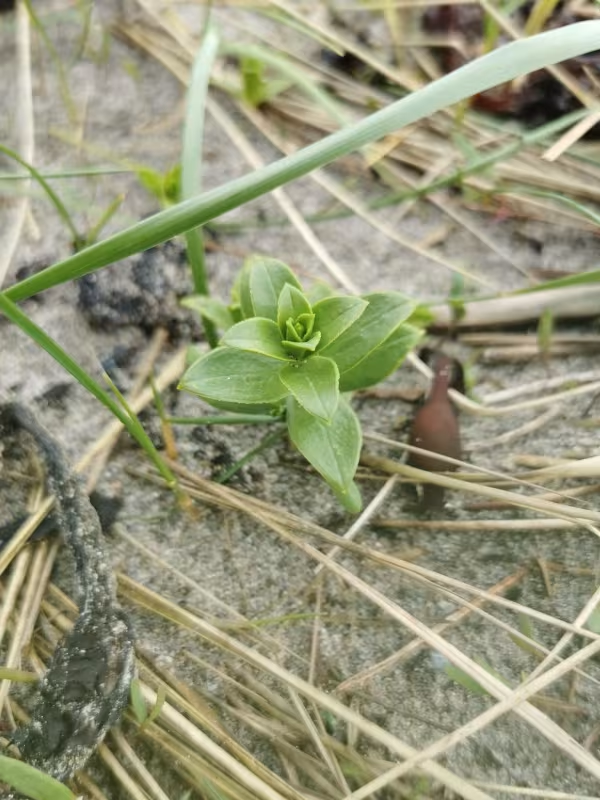
Description
Sowing dates
Honckenya peploides is a perennial plant of the Caryophyllaceae family. It is widely known for its ability to thrive in harsh coastal environments and sand dunes across the Northern Hemisphere.
Propagation is most effective through seeds that require stratification. Sowing seeds in late autumn allows them to undergo the necessary dormancy break before germination occurs in early spring.
Seeds should be sown shallowly in sandy, well-draining soil. Because they are light-dependent, covering them with a thin layer of sand is crucial to ensure successful emergence.
Vegetative propagation is also common, where rhizome cuttings are planted in early spring. This method ensures a quicker spread of the plant across designated coastal areas.
Establishing a new plot requires careful monitoring of the moisture level during the first few weeks, ensuring that the young plants can develop their extensive root system.
Growing requirements
As a true halophyte, Honckenya peploides requires saline conditions for optimal growth. It is perfectly adapted to seaside environments where it can tolerate high levels of soil salinity.
The plant demands full sun exposure. Any shading will drastically reduce its vigor and photosynthetic efficiency, leading to thin and spindly stems that lack commercial value.
Sandy soils with excellent drainage are mandatory. The plant cannot withstand waterlogged conditions, which lead to root rot and eventual death of the crop.
Irrigation should be precise. While the plant can survive drought, regular watering is essential for commercial yields to keep the foliage succulent and tasty.
Temperature range is broad, as the species is hardy and naturally resistant to the cold winds and low temperatures characteristic of northern coastal zones.
Yield
The harvest consists of the young, succulent shoots and leaves. These parts are prized in culinary circles for their unique salty, crispy profile and asparagus-like texture.
Commercial harvesting typically begins in the second year. To maintain productivity, growers use a selective harvesting technique, cutting only the most tender shoots to encourage regrowth.
Timing the harvest before the plant enters its flowering stage is vital. Once the plant blooms, the leaves become fibrous and lose their pleasant, mild flavor.
Post-harvest handling is critical because the shoots are highly perishable. Immediate pre-cooling and storage at low temperatures are required to ensure the product stays fresh.
Beyond human consumption, the plant is valued for sand dune stabilization and soil reclamation, providing an ecological bonus to the producer.
Main diseases and pests
Root rot caused by stagnant water is the most significant threat to Honckenya peploides. Proper soil drainage is the only reliable way to prevent this infection.
Invasive weeds can be a problem during the initial establishment of the crop. Regular weeding is necessary until the plant forms a dense mat that naturally suppresses competition.
The plant’s high salt content acts as a natural deterrent against most pests. Consequently, chemical pesticides are rarely needed, making it an excellent candidate for organic farming.
Occasionally, moisture-related fungal issues may occur if planting density is too high. Maintaining adequate spacing ensures sufficient air circulation between plants.
Protecting the crop from small mammals or rodents, which may dig up the rhizomes during winter, is advisable in regions with high wildlife activity.