
Hooked knawel
Scleranthus uncinatus
Description
Growing requirements
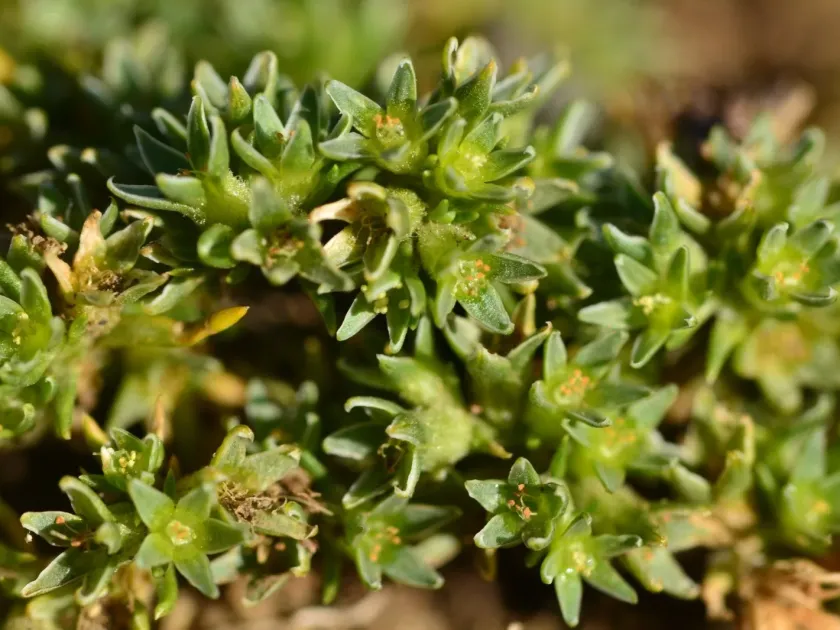
Hooked knawel (Scleranthus uncinatus) is a herbaceous perennial plant belonging to the Caryophyllaceae family. It is recognized for its unique morphological features, including small, hooked leaves and a compact growth habit that allows it to thrive in nutrient-poor environments.
The plant is specifically adapted to sandy, rocky, and well-drained soils where nutrient availability is low. Unlike more demanding crops, it does not require significant fertilization and maintains a stable presence in harsh conditions, making it an ecologically resilient species.
Regarding climatic requirements, the species performs best in temperate environments with high solar exposure. It is highly resistant to drought, as its biological mechanisms allow it to endure long periods without significant precipitation by entering a state of physiological semi-dormancy.
Agronomic management of Scleranthus uncinatus primarily focuses on sustainable grazing practices. Because the plant is slow-growing, overgrazing should be strictly avoided to prevent soil exposure and ensure the long-term survival of the plant population in the pasture ecosystem.
In terms of хозяйственного использования, the species is mainly valued for its soil-binding properties and its ability to act as a pioneer species in land reclamation projects. While it provides limited forage value, it contributes to the overall stability of vegetation covers on marginal, semi-arid agricultural lands.
Main diseases and pests
The primary threats to this plant are soil saturation and associated root diseases, which typically occur during excessively wet springs. Additionally, while the species is relatively pest-resistant, local outbreaks of chewing insects can cause minor damage to the foliage, though rarely requiring control.