
Chenault coralberry
Symphoricarpos x chenaultii Rehder
Description
Growing requirements
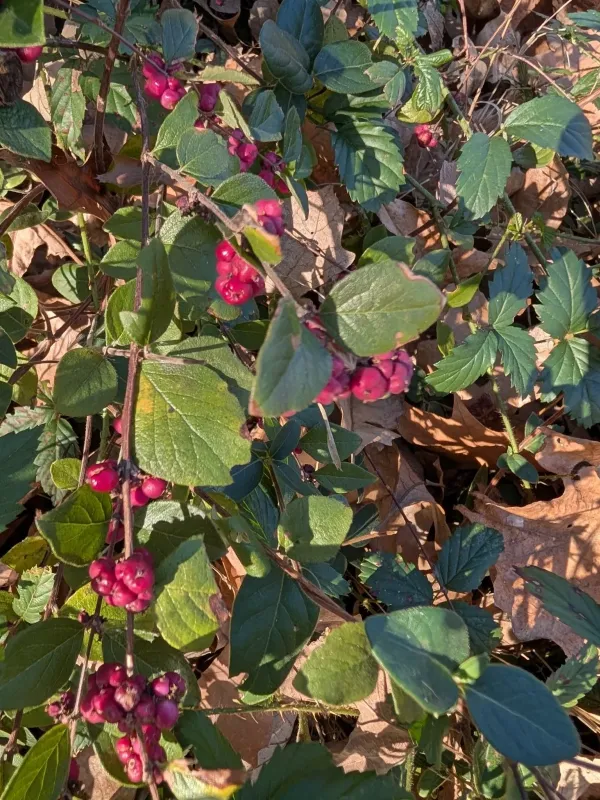
Chenault coralberry is an ornamental deciduous shrub belonging to the Caprifoliaceae family. It is a hybrid originating from the cross between Symphoricarpos microphyllus and Symphoricarpos orbiculatus, prized for its arching branches and attractive pink berries that persist through the late autumn and early winter.
This shrub is highly versatile regarding its growing conditions. It thrives in full sun to partial shade and is not particularly fussy about soil types, although it performs best in well-drained, slightly calcareous soils. It avoids waterlogged areas, which can lead to root system decay over time.
Climatically, the Chenault coralberry is robust and adapted to various temperate zones. While it prefers moderate conditions, it is hardy enough to withstand significant cold, provided the soil drainage is sufficient to prevent winter kill caused by saturated roots during freezing temperatures.
Agricultural and gardening maintenance focuses on rejuvenation pruning. Removing a portion of the oldest stems every spring encourages vigorous new growth, which ensures a denser shrub habit and more abundant berry production in the following season.
Its primary use is in landscaping as a ground cover, low hedge, or erosion control plant on embankments. The plant's ability to tolerate urban conditions makes it a popular choice for parks and residential gardens where a low-maintenance, aesthetically pleasing shrub is required.
Main diseases and pests
Chenault coralberry is generally considered a disease-resistant plant. However, in environments with poor air circulation and high humidity, it can be susceptible to powdery mildew, characterized by a white powdery layer on the leaves.
In certain damp seasons, leaf spot fungi may appear. Proper spacing during planting and regular thinning of the inner branches are essential cultural practices to improve airflow and minimize the impact of these fungal pathogens.
Pest issues are minimal but can occasionally include aphids during the tender leaf development stage in spring. If infestation levels are significant, treating the plant with neem oil or mild insecticidal soap is typically effective for control.
Root rot is rarely an issue unless the shrub is planted in heavy clay soil that retains too much moisture. Ensuring that the planting site has a well-structured soil profile is the most effective preventative measure against below-ground threats.
Routine monitoring during the growing season is recommended to catch any early signs of stress. Keeping the area around the base of the plant clear of debris also helps in maintaining general plant vigor and reducing habitat for potential pests.