
Beauty bush
Kolkwitzia amabilis Graebn.
Description
Growing requirements
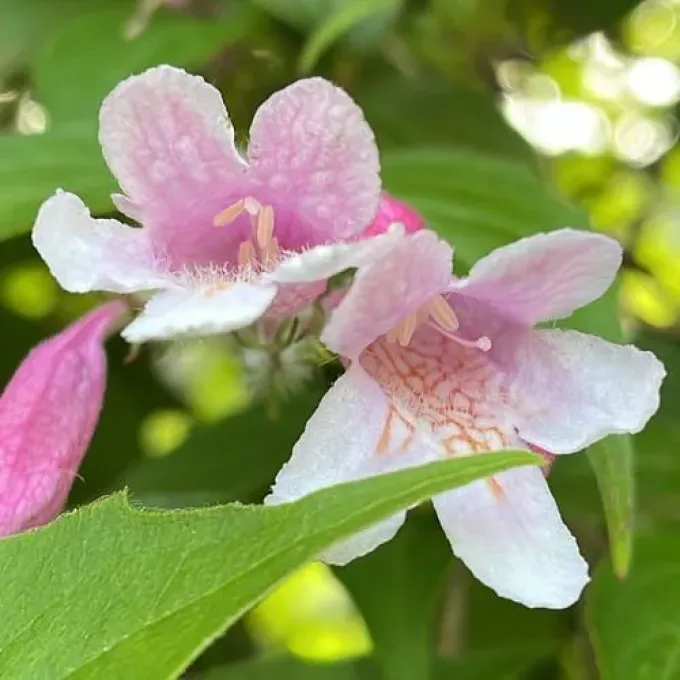
Beauty bush (Kolkwitzia amabilis) is a deciduous flowering shrub belonging to the Caprifoliaceae family. Native to the mountainous regions of central China, it is highly valued for its profuse, bell-shaped flowers that cover the branches in late spring.
The plant thrives in full sun, which is essential for maximizing flower production. While it is tolerant of various conditions, it prefers a well-drained, fertile soil. Exposure to the morning sun helps the foliage dry quickly, reducing the risk of fungal issues.
Regarding soil, it is adaptable to different pH levels, but prefers neutral to slightly alkaline conditions. It is important to ensure the site has good drainage, as the beauty bush does not tolerate "wet feet" or prolonged soil saturation.
Maintenance involves pruning immediately after flowering. Thinning out the oldest canes encourages new growth and keeps the shrub in a vigorous state, ensuring a beautiful structure for the following season.
In landscaping, this plant is primarily used as an ornamental specimen. Its arching branches and cascading blooms make it ideal for borders, cottage gardens, or as a stand-alone focal point in large landscapes.
Main diseases and pests
The beauty bush is generally known for its high resistance to pests and diseases. It is considered a low-maintenance plant that rarely suffers from significant health issues in proper growing environments.
Occasionally, leaf spot or mildew can appear if the plant is grown in areas with poor airflow or consistently high humidity. Improving the spatial layout of the garden can effectively prevent these conditions.
Pests like aphids may occasionally affect new growth in the early spring. Monitoring the plant during the initial stages of the growing season allows for early intervention if necessary.
The health of the plant is largely dependent on the quality of the soil and water management. Avoiding heavy, waterlogged soils is the primary strategy to prevent root-related issues that could weaken the plant.
Routine sanitization of the garden bed and removing diseased foliage helps in keeping the beauty bush robust and healthy throughout the year, minimizing the need for chemical intervention.