
Korolkow's honeysuckle
Lonicera korolkowii
Description
Growing requirements
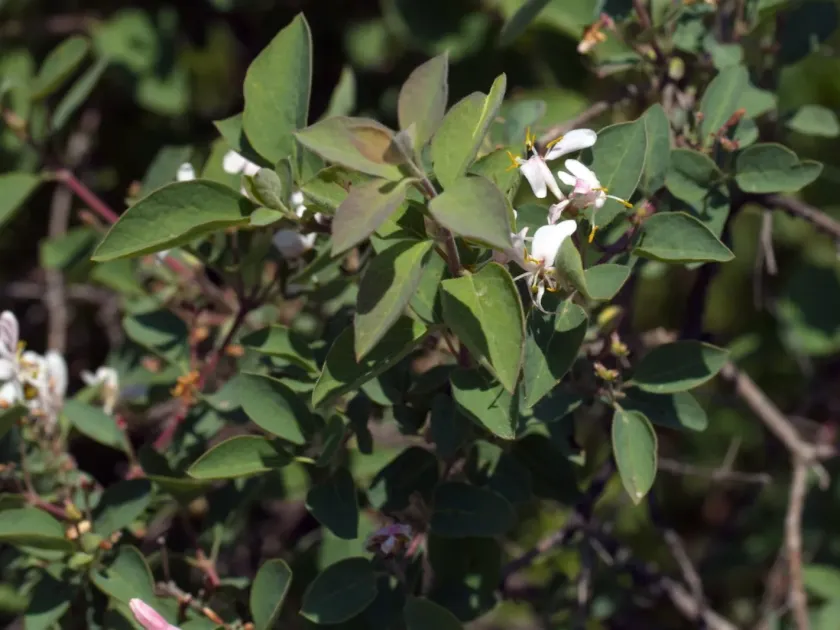
Korolkow's honeysuckle (Lonicera korolkowii) is a species of deciduous ornamental shrub belonging to the Caprifoliaceae family. Native to the mountainous regions of Central Asia, it has adapted to rugged landscapes and varying elevations.
This shrub is highly valued for its extreme hardiness and drought tolerance, making it an excellent candidate for temperate zone landscaping. It thrives in full sunlight, which is necessary to maintain its signature bluish-green or silvery foliage color, although it can tolerate partial shade.
The plant is not overly demanding regarding soil conditions; however, it prefers well-drained, fertile soil with a neutral to slightly alkaline pH. It demonstrates significant adaptability to poorer, rocky soils, reflecting its origin in the mountainous terrain.
Botanically, it is characterized by delicate, pale pink or white flowers that bloom in late spring, followed by bright red or orange berries. It is important to note that these fruits are not edible and are purely for ornamental interest, enhancing the shrub's appeal throughout the summer months.
In landscaping, it is primarily used for creating hedges, screens, and aesthetic focal points. Its ability to tolerate heavy pruning makes it a popular choice for structured garden designs and architectural pruning, where maintaining a specific shape is essential.
Main diseases and pests
The primary threats to Lonicera korolkowii include fungal infections, with powdery mildew being the most frequent issue. This disease often strikes during periods of high humidity or poor air circulation, necessitating regular thinning of the plant's branches.
Pests, such as aphids and leaf rollers, are common threats that feed on the succulent new growth of the plant. Infestations can cause significant leaf curling and stunt the overall development of the shrub if left untreated.
Effective management includes the use of systemic insecticides and fungicides when signs of infestation appear. Proactive monitoring during the spring and early summer is crucial to catching potential issues before they become severe.
Sanitary pruning is a vital cultural practice. By removing dead or diseased wood annually, gardeners can ensure better airflow through the canopy, which naturally reduces the likelihood of moisture-loving pathogens taking hold.
Maintaining proper soil health is also key to overall resilience. Ensuring that the shrub is not waterlogged will help prevent root rot, ensuring the plant remains vigorous and resistant to opportunistic infections throughout its lifespan.