
Guiraoa
Guiraoa
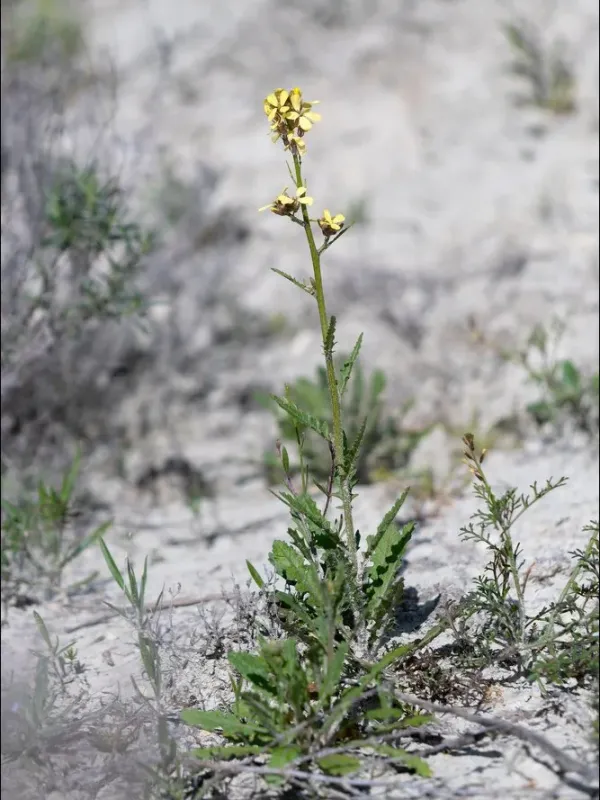
Description
Sowing dates
Guiraoa is a monotypic genus belonging to the Brassicaceae family, represented by the species Guiraoa arvensis. As a plant adapted to early spring cycles, it requires specific timing to ensure successful germination and early establishment in the field.
The optimal sowing period occurs in early spring when the soil temperature consistently reaches +5 to +8 degrees Celsius. Early planting is vital to allow the crop to complete its vegetative growth before the onset of extreme summer heat and prolonged moisture deficit.
Seeds should be sown in rows with a spacing of 15–30 cm. Due to the small size of the seeds, the sowing depth must be shallow, typically ranging from 2 to 3 centimeters, to ensure adequate access to moisture without impeding emergence.
Preparation of the seedbed involves creating a fine-grained, level surface. Post-sowing compaction with a roller is highly recommended to improve soil-to-seed contact, which significantly boosts germination rates in dry soil conditions.
Care must be taken to manage potential weed competition. Since Guiraoa grows relatively slowly at the start, starting in fields with a low weed seed bank is a best practice for maximizing potential yields.
Growing requirements
Guiraoa thrives in well-drained, light-textured soils. It is particularly sensitive to waterlogging, making it unsuitable for heavy clay or poorly drained soils where root respiration is restricted.
The crop requires full sun exposure for optimal development. Shaded areas lead to spindly growth and reduced flower induction, which negatively impacts the final seed or biomass yield of the plant.
Soil pH should ideally be neutral or slightly alkaline. The plant displays good adaptation to calcareous soils, which is consistent with its natural distribution in temperate, arid regions.
Fertilization should prioritize phosphorus during the initial stages to encourage root proliferation. Nitrogen applications should be moderate, as excessive nitrogen can lead to rapid stem growth and delayed maturation of the reproductive structures.
While the plant is hardy and possesses moderate drought tolerance, adequate moisture during the budding and flowering stages is necessary to achieve high reproductive output. Irrigation may be considered if rainfall is insufficient during these critical growth periods.
Main diseases and pests
The primary pathological threats to Guiraoa include fungal diseases such as downy mildew, particularly under conditions of high humidity and poor ventilation within the canopy.
Insects from the Brassicaceae family, such as flea beetles, are major pests. These insects can cause severe defoliation during the seedling stage, often requiring proactive management strategies to save the stand.
Crop rotation is the most effective cultural method to mitigate threats. Avoiding fields previously planted with other Brassicaceae crops for at least 4–5 years helps break the life cycles of common soil-borne pathogens and specialized pests.
Systemic insecticides applied as seed treatments are effective for early protection. However, once the plants reach the flowering stage, the use of chemical controls must be strictly avoided to protect pollinators and ensure environmental safety.
Monitoring for root-feeding larvae is also advisable, as they can cause significant, often invisible, damage that results in plant wilting and stunted growth later in the season.