
Goldbachia laevigata
Goldbachia laevigata
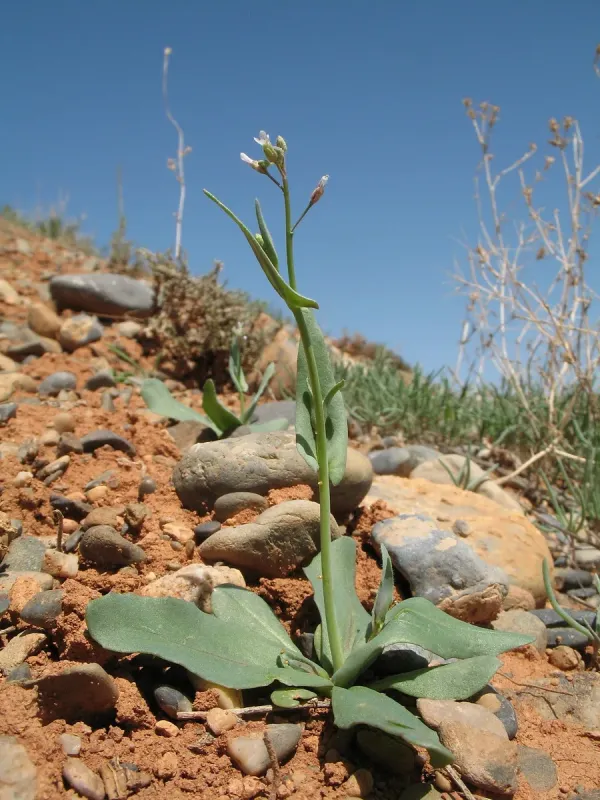
Description
Growing requirements
Goldbachia laevigata is an annual herbaceous plant belonging to the Brassicaceae (Mustard) family. It is native to the arid and semi-arid regions of Central Asia, the Caucasus, and parts of the Middle East, where it thrives in challenging ecological conditions.
The plant is highly valued for its exceptional drought tolerance. It is biologically adapted to survive in environments where water availability is limited for the majority of the growing season, relying on efficient moisture-retention mechanisms.
Soil requirements for this species are relatively flexible. It exhibits a remarkable tolerance for saline soils, often occupying niches where traditional crops struggle to germinate or develop properly due to soil alkalinity.
Temperature regulation is critical for the development of Goldbachia laevigata. It requires significant solar radiation and prefers wide diurnal temperature fluctuations, which trigger its physiological progression from vegetative growth to seed production.
Agricultural management primarily focuses on soil structure maintenance. Because it is a hardy species, it requires minimal chemical intervention, making it a subject of interest for sustainable agricultural research in desertified or degraded lands.