
Egyptian Eremobium
Eremobium aegyptiacum
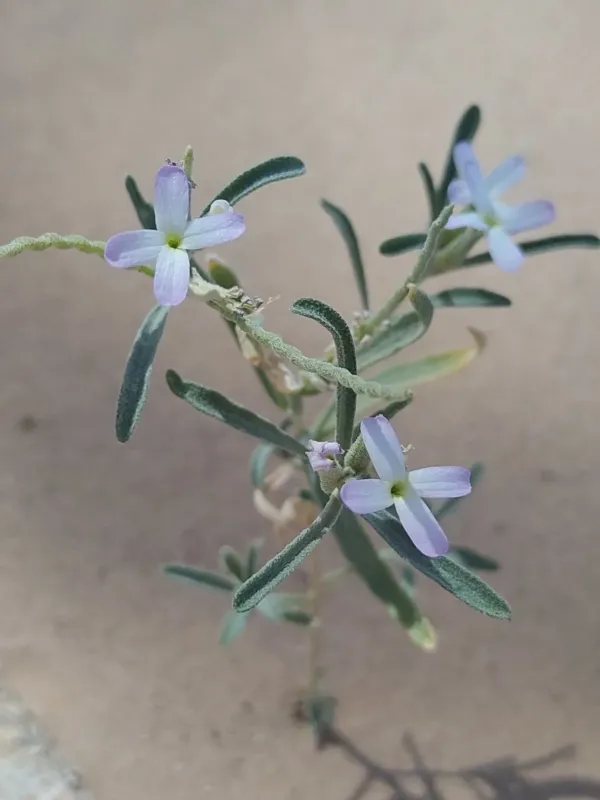
Description
Sowing dates
Egyptian Eremobium is a member of the Brassicaceae family, well-adapted to the harsh conditions of desert and semi-desert ecosystems.
Sowing times are typically synchronized with the arrival of seasonal rains, which provide the necessary moisture for seed germination.
In cultivation, seeds should be sown at a shallow depth to ensure they reach the surface quickly before the surface soil dries out.
The plant demonstrates a rapid germination rate when exposed to favorable moisture levels, characteristic of opportunistic desert vegetation.
Seedbed preparation should focus on maintaining a loose, friable soil structure to facilitate root development in sandy environments.
Growing requirements
This crop is a specialized xerophyte, thriving in environments where other traditional agricultural crops would fail due to water scarcity.
It prefers sandy or gravelly soils and is particularly noted for its high tolerance to saline conditions found in arid landscapes.
Full sun exposure is an absolute requirement for the plant to complete its life cycle successfully within its limited growing season.
Temperature tolerance is a hallmark of this species, allowing it to withstand high daytime temperatures and significant diurnal shifts.
Minimal nutrient requirements allow the plant to grow in soils where nitrogen and phosphorus levels are naturally quite low.
Yield
While not a traditional high-yield crop, the biomass produced by Egyptian Eremobium serves as valuable forage in marginal areas.
The total yield is largely dependent on the total precipitation received during the short window of active growth.
Productivity can be improved under experimental conditions by providing light supplemental irrigation during the most critical growth stages.
The seed yield is relatively small but consistent, ensuring the plant can effectively regenerate its population in the following season.
Future research may focus on optimizing yield through selection programs aimed at improving biomass quality for animal consumption.
Main diseases and pests
Fungal pathogens represent the most significant threat, particularly in years with uncharacteristic humidity or excessive irrigation.
Various insect pests, including cruciferous flea beetles, can cause localized damage to the leaves during the vegetative growth phase.
Root rot is a major risk factor if the soil structure does not provide adequate drainage during brief, heavy rainfall events.
Small herbivores can sometimes consume early growth, significantly reducing the success rate of a newly established patch.
Integrated pest management strategies focusing on resistant varieties remain the best approach to mitigating potential crop losses.