
Nama demissum
Nama demissum
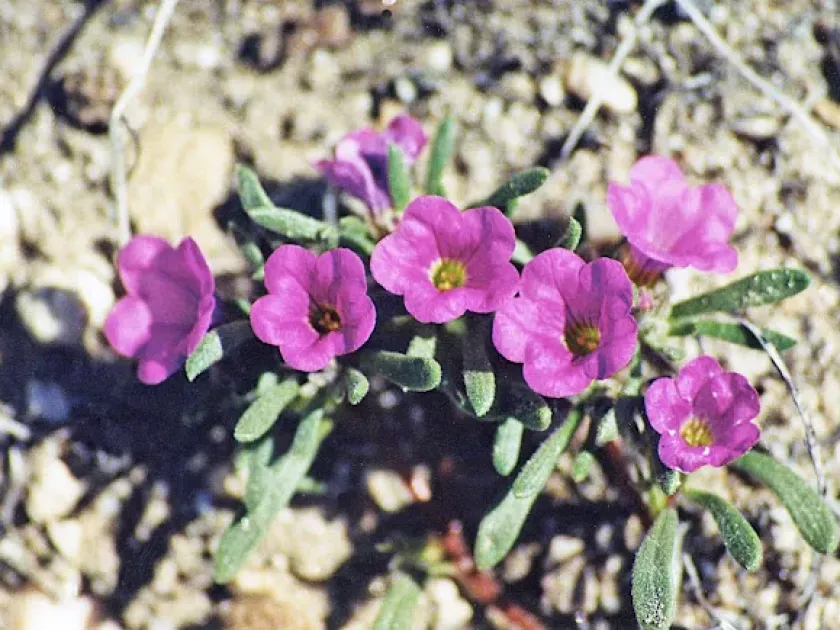
Description
Sowing dates
Nama demissum is an ephemeral desert plant whose germination cycles are triggered by specific precipitation patterns. In cultivation, seeds should be sown in late autumn or early winter to provide the cold stratification necessary for successful sprouting.
Sowing must be shallow, as the seeds are extremely small and require light for optimal germination. It is essential to keep the surface of the soil consistently moist during the initial stages to ensure the seeds establish roots.
When grown in controlled environments like greenhouses, early spring sowing is an option using sandy, well-draining substrates. Dense sowing should be avoided to minimize competition for resources among seedlings.
As the seedlings emerge, transition them slowly to a drier irrigation schedule. Proper ventilation is key to preventing damping-off, which is a common risk for seedlings growing in confined, humid conditions.
Optimal germination temperatures range between 10 and 15 degrees Celsius. Higher temperatures during the early development phase may lead to premature soil drying, which can be fatal for young Nama plants.
Growing requirements
Nama demissum is a member of the Boraginaceae family, natively adapted to the arid environments of the southwestern United States and Mexico. It is characterized by its low-growing, mat-forming habit and vibrant flowering display.
The plant thrives in sandy or gravely soils with exceptional drainage properties. It is highly intolerant of waterlogged conditions, making proper soil preparation the most critical factor for longevity and health.
Full sun exposure is mandatory for Nama demissum. Any level of shade will negatively impact the plant's structural integrity, leading to etiolated stems and a significant reduction in the quantity and quality of blooms.
Climatically, the plant prefers distinct seasons with a moist growth phase followed by a hot, dry period. It is well-equipped to handle moisture stress, but consistent care during its active growing window produces the best results.
It is an ideal choice for xeriscaping or rock gardens where mimicry of desert habitats is desired. The species adds color and texture to arid garden zones with minimal input of water or synthetic fertilizers.
Main diseases and pests
Root rot is the primary physiological threat to Nama demissum. This condition is almost exclusively caused by excessive irrigation or poor soil structure that holds moisture for too long, encouraging fungal growth.
While relatively pest-resistant in its natural habitat, cultivated plants may occasionally be targeted by aphids. Regular inspection of the foliage, especially in greenhouse conditions, is recommended to spot infestations early.
Slugs and snails can cause significant damage to young, tender foliage during periods of increased humidity. Barriers such as crushed stone or eggshells can effectively deter these pests from reaching the main stem.
Excessive fertilizer application can cause nitrogen toxicity or root burn. Because Nama is adapted to nutrient-poor desert soils, it requires very little external supplementation to flourish.
Weed encroachment is a major threat to the survival of young plants. Since the plant is low-growing and relatively small, it is easily outcompeted by invasive weeds that consume available nutrients and block essential sunlight.