
Corn gromwell
Buglossoides arvensis (L.) I. M. Johnst.
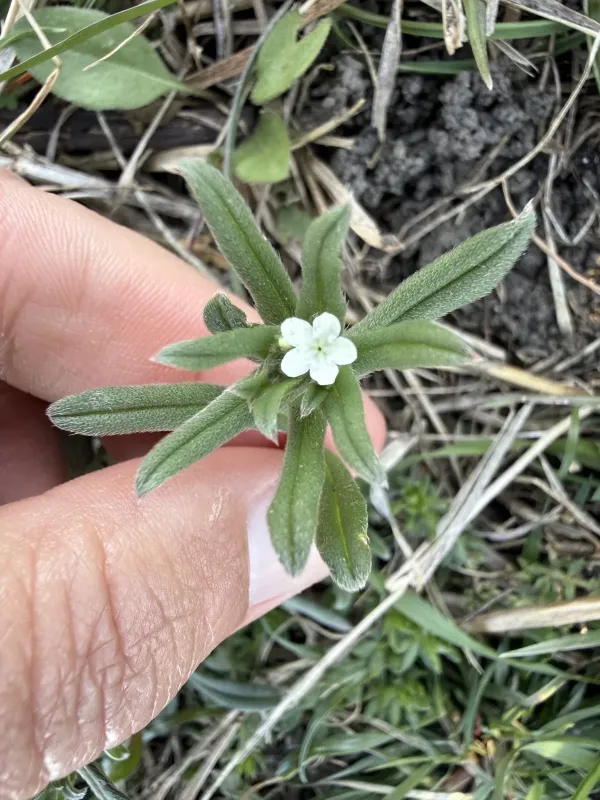
Description
Sowing dates
Corn gromwell, known scientifically as Buglossoides arvensis, is an annual plant belonging to the Boraginaceae family. Recently, it has gained attention as a specialized industrial crop due to the high content of gamma-linolenic acid found in its seeds.
The optimal sowing time for corn gromwell is early spring, as it is a cool-season crop that thrives in moderate temperatures. Seeding is typically performed using standard grain drills with a row spacing adjusted to ensure proper plant density.
Seeds should be planted at a shallow depth of approximately 1 to 2 centimeters. Because the seeds are relatively small, a firm and level seedbed is essential to ensure consistent emergence across the entire field.
Early-season weed control is vital because corn gromwell exhibits slow initial growth. Pre-emergence or post-emergence herbicide applications should be managed carefully to avoid phytotoxicity and to allow the crop to establish dominance over surrounding weeds.
Maintaining a target plant population of 300 to 400 plants per square meter is usually recommended to maximize yield. Proper spacing ensures that each plant receives sufficient sunlight and soil nutrients, reducing inter-plant competition.
Growing requirements
This crop is known for its ability to adapt to various soil types, but it performs best on well-drained loamy or sandy soils. It is particularly sensitive to waterlogging, which can severely stunt growth and increase susceptibility to soil-borne pathogens.
Corn gromwell is recognized for its drought tolerance once established. While it requires adequate moisture for germination and early vegetative stages, it can withstand dry spells better than many other small-seeded oil crops.
Full sun exposure is a primary requirement for this species. Insufficient lighting leads to reduced branching and lower seed production, as the plant needs intense light to synthesize the fatty acids stored in the seeds.
Balanced fertilization is recommended based on soil testing. Over-application of nitrogen can lead to excessive vegetative growth at the expense of seed yield, while phosphorus and potassium are essential for root health and overall plant resilience.
Crop rotation should be practiced diligently, especially avoiding other Boraginaceae species as predecessors. Rotating with cereals or pulses helps in managing soil-borne diseases and maintaining long-term soil health.
Yield
The yield potential of corn gromwell varies depending on regional climate and soil quality. Under favorable conditions, farmers can expect a harvest of 1.5 to 2.5 tonnes of seed per hectare, reflecting the crop's growing importance in the industrial oil market.
A key focus for producers is the oil content of the seeds. Modern agronomy aims to improve yield through the selection of high-performing varieties and optimized timing of harvest to capture peak oil content before seed shattering occurs.
Yield reliability is closely linked to the management of weeds during the early vegetative phase. Effective weed suppression can mean the difference between a high-yielding crop and a failed harvest due to nutrient competition.
Technological improvements in harvesting equipment have also contributed to higher yields. By reducing shattering losses during the collection phase, farmers can significantly increase the total volume of saleable seeds recovered from the field.
Post-harvest handling is critical. Because the seeds are rich in high-value fatty acids, careful storage in climate-controlled environments is necessary to prevent rancidity and ensure the seeds remain viable for extraction purposes.
Main diseases and pests
The most common disease affecting corn gromwell is powdery mildew, particularly in seasons with high humidity or poor air circulation. This fungal disease reduces photosynthetic efficiency and can significantly curtail seed maturation.
Root rot diseases present a challenge in poorly drained fields. Preventive measures, such as selecting well-drained planting sites and using high-quality treated seed, are the primary lines of defense against these subterranean threats.
Insect pests, including various species of leaf beetles and weevils, can cause significant damage to leaves and developing flower buds. Regular scouting is required to initiate insecticide treatment only when economic thresholds are reached.
Aphids can colonize the inflorescences during the flowering stage, potentially impacting seed set. Integrated pest management strategies, including the promotion of beneficial insect populations, are recommended to minimize chemical reliance.
- Powdery mildew
- Root rot
- Leaf beetles
- Weevils
- Aphids
Harvesting
Harvesting corn gromwell is a delicate process due to the potential for seed shattering as the plant reaches full maturity. The goal is to harvest when the seeds are fully developed but before the capsules open naturally.
Direct combining is common if the field is uniform, but swathing (mowing and windrowing) is often preferred if the crop matures unevenly or if weed pressure is high. This allows the plant material to dry more uniformly in the field.
Adjusting combine settings—particularly drum speed and concave clearance—is vital to prevent mechanical damage to the seeds. The objective is to thresh effectively without crushing the seeds or increasing the amount of chaff in the harvested bulk.
Immediate drying is required post-harvest to bring moisture levels down to safe storage limits, typically below 12 percent. Seed quality degrades rapidly if held at high moisture levels due to fungal activity and internal heat build-up.
Cleaned seeds should be stored in cool, dark conditions to protect the oil profile from oxidative degradation. Efficient logistics between the harvest and processing facility are essential to maintain the high quality of the extracted oils.