
Borage
Borago officinalis L.
Description
Sowing dates
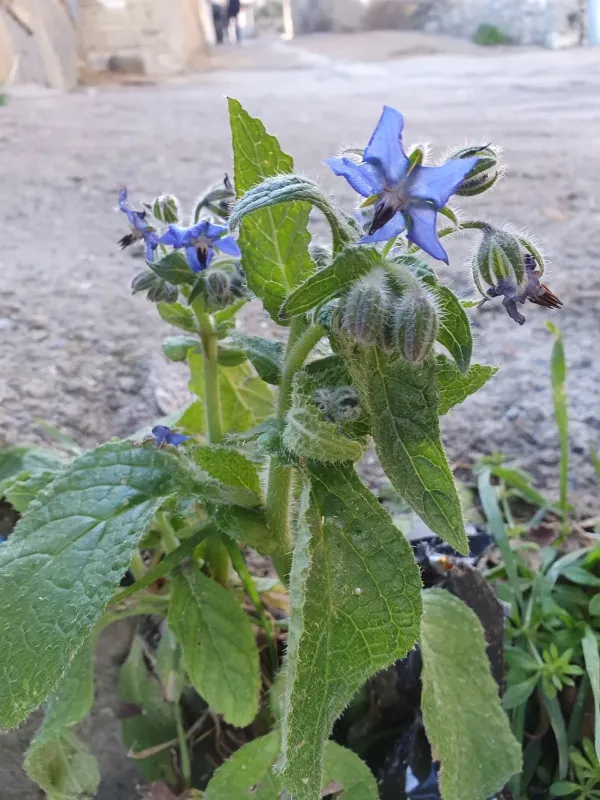
Borage (Borago officinalis) is an annual herb belonging to the Boraginaceae family. It is widely recognized for its vibrant blue star-shaped flowers and its refreshing cucumber-like scent, which makes it a popular choice for culinary applications.
The seeds are typically sown directly into the soil in early spring as soon as the ground can be worked. Borage is quite hardy and can tolerate light frosts, meaning it can be planted well before the danger of frost has passed.
For a continuous harvest of fresh leaves, succession planting every 3 weeks is recommended throughout the spring and early summer. Seeds should be sown at a depth of about 2 centimeters, with spacing of at least 30-40 centimeters between plants.
Borage grows rapidly and can reach a height of up to 60-90 centimeters. Because it is a vigorous grower, it is important to provide enough space, though it is often grown in borders where its self-seeding nature is welcome.
The plant thrives in most soil types but prefers well-drained, fertile soil. It is an excellent companion plant in the garden, often grown near tomatoes and strawberries to improve their growth and health.
Growing requirements
Borage flourishes in full sun, though it can tolerate partial shade in hotter climates. Adequate sunlight is crucial for the development of its aromatic leaves and the production of its nectar-rich flowers.
The plant is not overly demanding regarding soil fertility, but it responds well to the addition of organic matter such as compost or well-rotted manure, which helps retain moisture and provide essential nutrients.
Watering should be consistent to keep the soil moist, especially during the establishment phase and during periods of hot, dry weather. While the plant has a taproot that helps it find moisture, supplemental water improves foliage quality.
It prefers a neutral to slightly alkaline soil pH. Good drainage is essential, as waterlogged conditions can lead to root rot and other fungal diseases, particularly in humid environments.
Since the plants can grow quite tall and may become top-heavy, providing support or planting them in sheltered areas away from strong winds can prevent lodging and damage to the stems.
Yield
Borage is a highly productive plant, with a single plant yielding a significant amount of leaves throughout the season. When grown in rows, it can provide a substantial crop for fresh market sales or personal culinary use.
The first leaves can be harvested as early as 4-6 weeks after sowing. The plant remains productive throughout the summer and into autumn, provided that the flower stems are harvested or removed to encourage secondary leaf growth.
As a nectar source, borage is one of the highest-yielding honey plants, making it extremely valuable for beekeepers. An acre of borage can support a large number of bees and contributes significantly to honey production.
Seed production is also quite high. If left to bloom and set seed, the plant will produce numerous black seeds that easily germinate the following year, ensuring a self-sustaining patch.
Managing the plant to focus on either leaf or flower production is key to maximizing its value. For leaf production, early harvest before flowering is critical; for flowers, allowing the plant to reach its full decorative stage is preferred.
Main diseases and pests
The most common disease affecting borage is powdery mildew, which appears as white dusty spots on the leaves. This usually occurs in late summer during periods of high humidity and poor air circulation.
Slugs and snails can be problematic, especially for young seedlings. Protecting the base of the plants or using natural deterrents can minimize damage during the sensitive early growth stage.
Aphids occasionally infest the undersides of the leaves or the stems. While usually not lethal, heavy infestations can weaken the plant and reduce the aesthetic quality of the foliage.
Proper plant spacing is the best preventative measure against most pests and diseases. Ensuring good airflow helps keep the foliage dry and discourages the spread of fungal spores.
Avoid overhead irrigation during the evening to prevent prolonged moisture on the leaves, which can exacerbate the development of fungal infections in dense plantings.
Harvesting
Harvesting the leaves is done by plucking the younger, more tender leaves. These leaves should be used fresh, as they do not dry well and lose their cucumber-like flavor quickly if stored for too long.
Flowers should be harvested individually as they open. They are best picked on a dry, sunny morning after the dew has evaporated, as this is when the nectar content and flavor are at their peak.
For seed saving, harvest the entire flower spike once the seeds in the lower parts of the clusters have turned dark brown. Place the stems in a paper bag to catch the seeds as they dry and drop.
Fresh leaves can be chopped and added to salads, cold soups, or infused in beverages. They add a refreshing taste that is particularly appreciated in summer cocktails and cool drinks.
When harvesting for medicinal purposes, the entire aerial part of the plant is usually collected just as it begins to flower, ensuring the most potent concentration of its active compounds.