
Annatto
Bixa orellana L.
Description
Sowing dates
Propagation of Bixa orellana is most commonly performed through seeds in specialized nurseries. Seeds are sown into containers or prepared seedbeds with loose, well-draining substrate, ensuring consistent moisture levels throughout the germination period.
The optimal time for sowing usually coincides with the beginning of the rainy season, which provides seedlings with sufficient moisture for root establishment. Pre-treatment of seeds via scarification helps improve germination rates and uniformity.
Once seedlings reach a height of 30-40 centimeters, they are transplanted to their permanent site in the open field. Planting density typically ranges from 500 to 800 trees per hectare, depending on the specific goals of the plantation.
Vegetative propagation via cuttings is also practiced to preserve the desirable traits of high-yielding mother trees. These cuttings are rooted in high-humidity greenhouse conditions to ensure successful establishment.
Young plants require shading during the first months after transplanting to protect them from heat stress and excessive transpiration. A gradual acclimatization process ensures stronger overall plant immunity.
Growing requirements
Annatto is a tropical evergreen shrub or small tree belonging to the Bixaceae family, which is highly sensitive to temperature fluctuations. It thrives in climates characterized by consistently warm temperatures and abundant rainfall throughout the year.
The crop performs best in fertile, well-drained loamy soils with a neutral to slightly acidic pH. Waterlogging in the root zone is detrimental to the plant, making well-drained, slightly sloped terrain a preferred choice for cultivation.
The plant requires regular sun exposure for optimal growth, although young seedlings can tolerate partial shade. Annual rainfall of at least 1200-1500 mm is generally required for full plant development.
In commercial settings, it is crucial to provide shelter from high winds, which can damage brittle branches and reduce overall yield. Establishing windbreaks around the plantation perimeter significantly increases tree survival.
Applying mineral fertilizers rich in nitrogen and potassium during the early growth stages stimulates biomass production. Mature trees benefit from periodic organic amendments to sustain high fruit yields over time.
Yield
Commercial harvesting of annatto generally begins 2–3 years after transplanting into the field. Full productive maturity is typically reached by the fifth year of the tree's lifespan.
Yields of seeds per hectare range from 500 to 1500 kg, depending on the specific agrotechnical practices and the age of the plantation. Proper management allows for stable fruit production for 15 to 20 years.
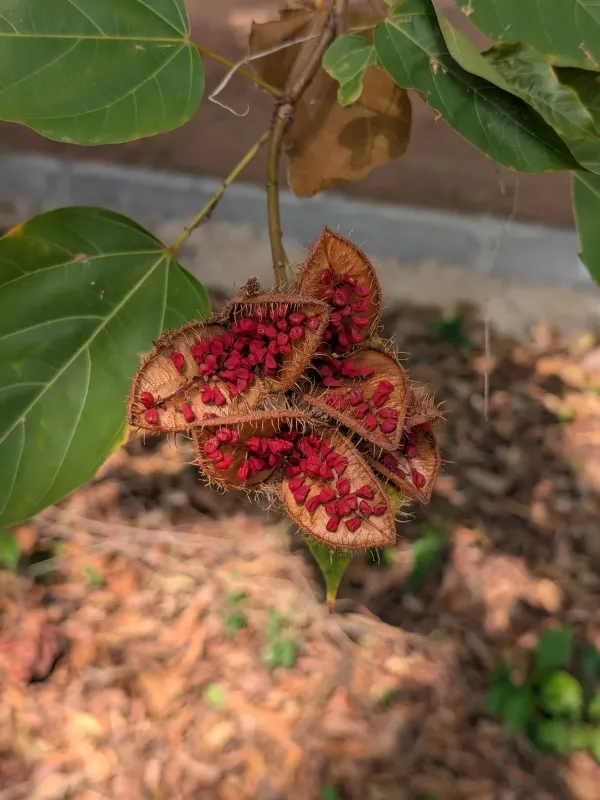
The fruit is a heart-shaped capsule covered in soft spines, which changes color from green to vibrant red or dark brown upon maturation. This visual transition serves as the primary indicator for harvest timing.
Inside the capsule are numerous seeds coated in a bright red aril, which is the source of the valuable annatto food coloring. The concentration of the pigment bixin in the seed coating is the main determinant of product quality.
Harvest efficiency depends directly on the maturity of the capsules; premature harvesting decreases pigment concentration, while delayed harvesting leads to spontaneous capsule splitting and seed loss.
Main diseases and pests
The main pests affecting annatto include leaf-eating caterpillars and aphids, which can significantly damage the foliage of young trees. Regular inspection of the plantation is essential for timely detection and intervention.
Fungal diseases, such as anthracnose and root rot, often occur due to poor drainage or excessive humidity. Prompt removal of infected plant material is vital to prevent the spread of these pathogens.
In regions with distinct dry seasons, trees may become vulnerable to scale insects and spider mites. The use of biological insecticides is generally preferred to maintain the quality of the harvested produce.
Nematodes that attack the root system pose a serious threat, particularly in sandy soil types. Prevention involves using healthy planting material and strictly following crop rotation cycles in nursery management.
- Leafroller caterpillars
- Powdery mildew under high humidity
- Root rot (Phytophthora)
- Scale insects
- Aphids
Harvesting
Harvesting is conducted manually by cutting the ripened capsules from the branches using shears or sharp knives. Careful handling is required to avoid damaging the outer seed coating before processing.
After collection, the fruits must be dried in the sun or using specialized mechanical dryers until they begin to open easily. This stage is critical and requires precise temperature and ventilation control.
Once dried, the capsules are opened, and the seeds are extracted and cleaned of impurities. The final raw product is sorted by size and color intensity for commercial distribution.
For long-term storage, the seeds are kept in dry, cool, and well-ventilated facilities, away from direct sunlight. Seed moisture content during storage must be kept below 10-12% to prevent quality degradation.
Pigment extraction may occur on-site or at specialized processing plants. Modern technologies allow for the production of stable annatto concentrates, widely used across the global food processing industry.