
Blue-leafed wattle
Acacia cyanophylla
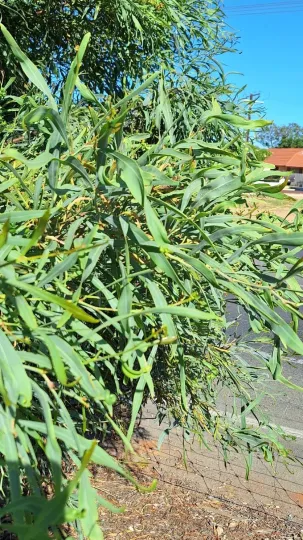
Description
Sowing dates
Sowing of Blue-leafed wattle seeds typically occurs in spring once soil temperatures reach 15–20 degrees Celsius. Seed coat dormancy is common, so pre-treatment through scarification or soaking in hot water is essential to trigger germination.
In nursery settings, container-based propagation is preferred. This method ensures a robust root system, which is crucial for survival when the young trees are transplanted into harsh, sandy environments.
Spacing is determined by the specific land use. For windbreaks or shelterbelts, a distance of 3–4 meters between rows allows for optimal crown development and effective protection against wind erosion.
Initial establishment requires supplemental watering until the taproot has sufficiently developed to reach deeper moisture reserves. Once established, the species exhibits exceptional hardiness and rarely requires additional irrigation.
Transplanting should be scheduled immediately after the risk of frost has passed. This timing provides the saplings with the longest possible growing season to harden off before the arrival of the next winter cycle.
Growing requirements
Acacia cyanophylla belongs to the Fabaceae family and is highly valued for its ability to thrive in degraded and nutrient-poor sandy soils. It is particularly noted for its role in land reclamation projects.
The species forms a symbiotic relationship with nitrogen-fixing bacteria in its root nodules. This process significantly improves soil fertility, making it a pioneer species for restoring depleted agricultural land.
Full sunlight is a critical requirement for healthy development. The tree is highly light-demanding, and any significant shading from nearby vegetation will lead to the thinning of the crown and lower branches.
Climate adaptability is one of its primary strengths. It prefers Mediterranean-type climates with warm, dry summers and is notably tolerant of saline soils, though it remains sensitive to severe, prolonged frosts.
Cultural practices are minimal, as the tree is self-sustaining in its preferred habitat. Regular leaf fall adds organic matter to the soil, further enhancing the microenvironment beneath the canopy over time.
Yield
Biomass production is a primary focus for plantations of this species. The wood is dense and suitable for high-quality charcoal production and serves as an efficient source of fuel in wood-scarce regions.
Foliage yield is significant and often harvested in arid zones as a supplemental forage for livestock. While not the primary protein source, it serves as a valuable fodder during periods of drought when grass is scarce.
Seed production is prolific, ensuring the species can be easily propagated for widespread land restoration. The seeds are durable and can remain viable for several years if stored under dry conditions.
Yields are also measured in terms of environmental services, such as the total volume of stabilized sand dunes or the reduction of soil loss in wind-prone agricultural fields.
Sustainable harvesting of branches through periodic pruning can yield consistent amounts of timber without harming the long-term vitality of the mother trees, provided the pruning is done correctly.
Main diseases and pests
Foliage-eating insects such as leaf beetles represent the most common threat to the tree. Significant outbreaks can cause defoliation, though healthy trees usually recover once the insect cycle concludes.
Root rot diseases present a risk primarily in areas with poor drainage or excessive soil moisture. Maintaining correct drainage is the most effective preventative measure against these soil-borne pathogens.
Parasitic plants, such as mistletoe, may occasionally infect mature specimens. Regular inspection and the removal of infected branches are standard management practices to ensure the long-term health of the plantation.
Spider mites can become a nuisance during extreme heat waves, especially if the plants are stressed. The resulting leaf discoloration reduces the photosynthetic capacity, which can hinder the growth rate.
Maintaining biological diversity around the plantation helps control pest populations naturally. Proper plant spacing also aids in preventing the rapid spread of infections between individual trees.