
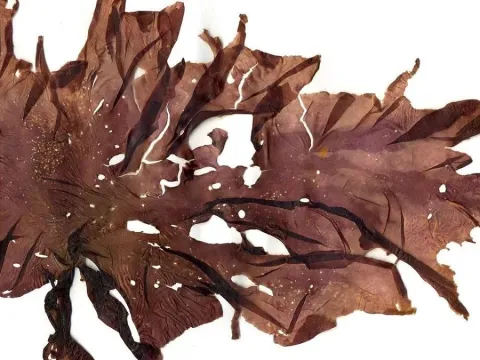
Porphyra
Porphyra
The life cycle of Porphyra is characterized by an alternation of generations, which determines the specifics of sowing in mariculture. The main "sowing" stage involves colonizing special substrates (nets or ropes) with algal spores, known as conchospores.
What the section contains


Porphyra
The process usually begins in hatcheries on mollusk shells, where the sporophyte, known as the conchocelis stage, develops. During autumn, as water temperatures drop and daylight hours decrease, conchospores are released and settle onto the collectors.
Technically, the process of transferring the substrate into the sea is conducted in the fall, when water temperatures fall to 15–20 degrees Celsius. This is a critical moment that requires precise adherence to temperature regimes for successful spore attachment.
In modern farms, artificial seeding methods are actively used, allowing for the control of culture density and the exclusion of contamination by wild algal species. This ensures the stable development of future thalli.
An important aspect is the timely placement of nets in the water column to ensure optimal access to nutrients and sunlight for the initial growth of the thalli.
Porphyra is a red alga from the Bangiaceae family, which imposes strict requirements on marine water quality. It prefers coastal areas with moderate currents that provide a constant influx of biogenic elements, such as nitrogen and phosphorus.
The optimal temperature range for vegetation is between 5 and 15 degrees Celsius. If temperatures rise significantly, the thalli begin to degrade rapidly, and the risk of disease increases exponentially.
Water salinity must be maintained within the range of 25–30 parts per thousand. Significant desalinization due to floods or heavy rainfall can negatively affect the development of the thalli and their pigmentation.
Light intensity is a limiting factor, so nets with Porphyra are placed at depths where photosynthesis intensity is maximal, but overheating under direct sunlight is avoided.
Environmental monitoring of water conditions is a mandatory condition of agronomy. Any industrial pollution with heavy metals or an excess of organic matter is unacceptable, as Porphyra has a high capacity for their accumulation.
The yield of Porphyra directly depends on the cultivation technology and the skill of managing marine plots. On an industrial scale, the output of the dry product varies depending on planting density and the frequency of harvests.
When using intensive technologies, several full harvests can be obtained from one hectare of water area per season. Regular trimming of the thalli stimulates regeneration and active growth of new tissues.
The biological potential of the species allows thalli to grow up to 20–50 centimeters in length during the vegetation period. Timely harvesting prevents tissue aging and the loss of commercial qualities such as elasticity and color.
Average yields reach tens of tons of raw biomass per hectare under ideal conditions. However, the final figure is determined by the efficiency of logistics and the farm's drying capabilities.
Global practice shows that with competent resource management, farms achieve high profitability through deep processing of raw materials into finished products.
The main threat to plantations is infectious diseases caused by chytrid fungi (Chytridiales) and various types of bacteria. They can destroy a significant portion of the crop in a short time under unfavorable weather conditions.
Among pests, certain small marine invertebrates and epiphytic organisms compete with Porphyra for nutrients. Covering the thalli with other algae reduces their photosynthetic activity.
Abiotic factors, such as "bleaching" or tissue necrosis, are often triggered by sudden changes in salinity or prolonged calm weather, leading to a deficiency of dissolved gases and nutrients in the growth zone.
- Fungal infections (chytridiomycosis)
- Bacterial rot
- Overgrowth by epiphytic algae
- Damage by small crustaceans
Disease prevention is based on crop rotation (changing plots) and timely cleaning of collectors. Regular inspection of the crops for changes in color or texture allows for the localization of infection hotspots at an early stage.
Harvesting Porphyra is a high-tech process involving the use of automated harvesting vessels. Harvesting is carried out by mechanical trimming of the thalli, leaving part of the plant for subsequent regeneration.
The frequency of harvests is selected empirically based on the rate of biomass accumulation. During peak periods, harvesting can be done every 10–14 days, ensuring maximum annual product output.
Immediately after harvest, the raw material is sent to onshore facilities for primary processing. It is crucial to minimize the time between harvesting and drying to avoid degradation of nutrients and enzymatic tissue breakdown.
During processing, the raw material is washed, ground, and formed into sheets, which are then subjected to controlled drying. In its final form, the product is known globally as nori, used in culinary applications.
Storage of the finished product requires airtight packaging that protects against moisture and ultraviolet light to maintain the unique taste, aroma, and mineral composition of the marine crop.