
Nori
Porphyra yezoensis
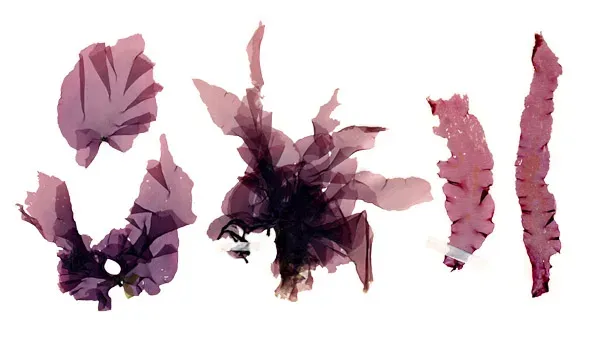
Description
Sowing dates
The life cycle of Porphyra begins with the conchocelis phase, which is cultivated under controlled conditions on mollusk shells, typically during the spring. In late summer or early autumn, conchospores are released and seeded onto specialized substrates, such as synthetic nets, submerged in seawater.
The seeding process requires precise control of temperature and light to ensure optimal spore attachment. The timing of seeding depends on water temperature, which should drop below 20-22 degrees Celsius to facilitate natural settlement.
Once the spores are securely attached, the nets are deployed to marine farms. Achieving an even distribution of spores across the netting is critical for maximizing future crop density.
Modern farms utilize closed tanks to cultivate the conchocelis phase, allowing for strict environmental control and guaranteeing high-quality, disease-free seed material before deployment.
Artificial seeding technologies have revolutionized the industry, making production independent of the fluctuating natural populations of wild Porphyra.
Growing requirements
Porphyra is a red alga belonging to the Bangiaceae family that requires specific environmental conditions to thrive. The primary requirements include water temperatures between 5 and 15 degrees Celsius and high light intensity for photosynthesis.
The crop depends on seawater rich in nutrients, particularly nitrogen and phosphorus. Maintaining high water quality is essential, as pollutants can significantly inhibit growth rates and reduce crop vitality.
Efficient water movement, provided by tidal currents, is vital for the effective nutrient uptake and metabolic exchange of the seaweed. Proper flow prevents the accumulation of waste products and ensures healthy development.
Optimal salinity levels range between 25 and 33 parts per thousand. Significant fluctuations in salinity, often caused by heavy rainfall or freshwater runoff, can cause severe stress or mortality to the farm.
Proper depth placement during the design of a farm is crucial to ensure the seaweed remains submerged at appropriate levels, protecting it from desiccation during low tides.
Yield
The yield of Nori is measured by the mass of fresh biomass harvested per hectare. Through intensive farming techniques, producers can achieve multiple harvests within a single growth season.
Periodic trimming of the thalli stimulates regrowth and enhances rejuvenation, significantly increasing the overall biomass output compared to unmanaged growth.
The selection of premium cultivars, bred for disease resistance and rapid nutrient accumulation, plays a vital role in increasing the yield per unit area of the marine farm.
Crop quality is determined by the strict adherence to cultivation parameters, which influence the texture, pigment concentration, and overall chemical composition of the final product.
Comprehensive management practices allow for high-efficiency production even in limited marine spaces, ensuring a stable supply of high-grade seaweed for the market.
Main diseases and pests
Fungal diseases, such as Oomycete infections, represent a significant threat to Nori farms, especially when high-density planting facilitates rapid transmission. Affected tissue quickly loses color and market value.
Bacterial pathogens can cause tissue degradation, requiring immediate sanitation efforts or the removal of infected net sections to prevent the spread of the illness.
Various pests, including small crustaceans, may damage the thalli, reducing growth rates. Regular monitoring of the nets is a standard preventative measure in modern aquaculture.
Epiphytic algae often compete with Porphyra for sunlight and nutrients, requiring consistent manual or mechanical cleaning of the nets to maintain productivity.
Climate anomalies, particularly sudden increases in water temperature, can lead to mass bleaching and the total loss of the crop within just a few days.
Harvesting
Harvesting Nori typically occurs during the cooler months, when the thalli have reached maturity and optimal nutritional composition. Modern farming operations rely heavily on mechanized harvesting.
Specialized harvesting boats travel along the rows of nets, cutting the matured biomass without damaging the base, which allows the seaweed to regenerate for subsequent harvests.
Once harvested, the raw seaweed is immediately washed and processed. Traditional methods involve shredding, drying on specialized frames, and pressing into the characteristic sheets known as Nori.
Rapid logistics and transportation to the processing plant are essential to preserve the freshness and flavor profile of the seaweed before it undergoes the final drying stage.
Efficient harvesting and post-harvest management directly influence the profitability of the operation, making optimization of these stages a priority for all professional seaweed farmers.