
Bangia
Bangia
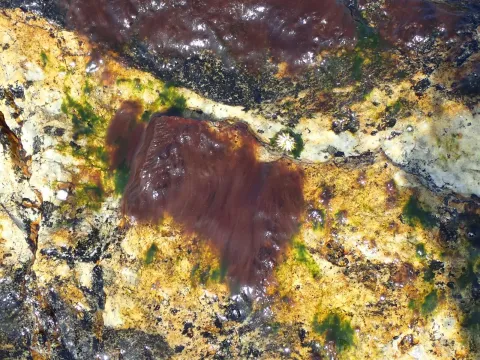
Bangia is a genus of red algae within the family Bangiaceae. It is characterized by its filamentous structure, which is clearly visible in the macroscopic gametophyte stage, often forming dense, dark-colored mats on coastal substrates.
What the section contains

Bangia
The environmental requirements for Bangia are quite specific, as it typically thrives in intertidal zones. It demonstrates a high tolerance for varying levels of salinity, a trait that makes it suitable for specific types of marine farming in coastal regions.
Optimal growth depends on temperature control, as the species generally prefers temperate to cold marine waters. Fluctuations in seasonal temperatures act as natural triggers for the transition between the life cycle phases of the algae.
Substrate type is a critical parameter for successful cultivation. While naturally occurring on rocks, commercial production relies on synthetic mesh nets or specialized ropes that provide a stable surface for the spores to settle and grow.
Nutrient availability in the water column, specifically nitrate and phosphate levels, must be balanced to ensure rapid biomass accumulation. Excessive pollution or poor water circulation can hinder development and lower the quality of the harvested seaweed.
Harvesting Bangia is typically executed during the peak growth season, often involving mechanical or manual removal of the filamentous thalli from the nursery frames or collection nets.
Great care must be taken during the harvesting process to prevent degradation of the cellular structure. Rapid handling after removal from the aquatic environment is essential to maintain the freshness and nutrient density of the algae.
Post-harvest processing involves thorough cleaning to remove epiphytes and debris, followed by dehydration. Sun-drying is the most common method, though large-scale operations may utilize industrial-grade drying ovens to control the final moisture content.
The harvested product is primarily valued in food industries, particularly in Asian markets, where it is used similarly to related genera like Porphyra. It is highly regarded for its texture and rich mineral profile.
Packaging of the final product requires moisture-proof materials to ensure shelf life stability. Proper storage conditions, away from direct sunlight and humidity, are crucial for preserving the chemical integrity of the seaweed.