
Porphyra umbilicalis
Porphyra umbilicalis
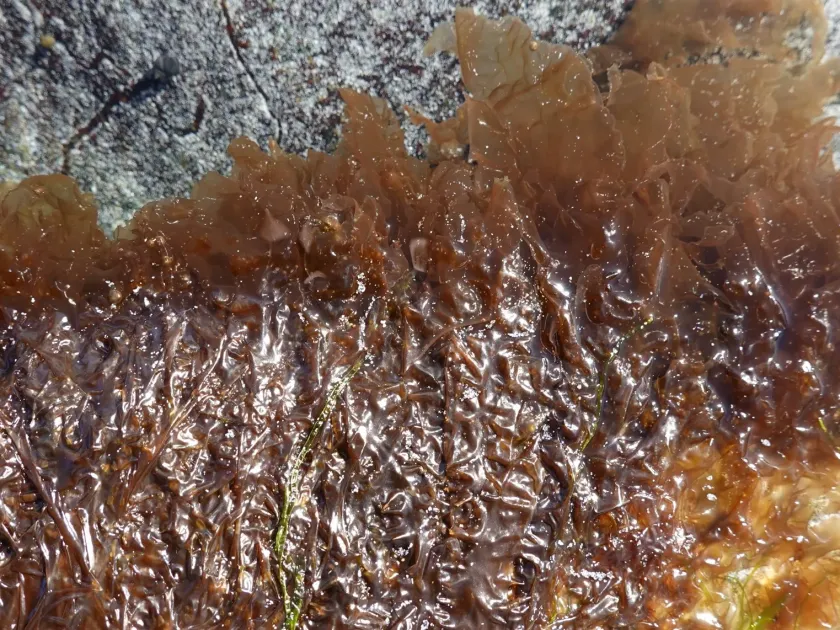
Description
Sowing dates
The cultivation of Porphyra umbilicalis begins with the seeding process, where conchocelis filaments are used to inoculate artificial substrates. This phase usually occurs during the late autumn, targeting specific temperatures that trigger the growth of the foliose thalli.
In commercial mariculture, ropes or synthetic nets are placed in incubation tanks to allow spore attachment. The density of spores is strictly controlled to ensure optimal spacing, which prevents overcrowding and allows each plant to access sufficient nutrients and light.
Once seeded, the substrates are transferred to the sea. The timing of this transfer is critical; it is often coordinated with local oceanic cycles to ensure that the water temperature and nutrient levels are ideal for the rapid development of the young thalli.
Modern farms utilize specialized machinery to manage these submerged nets. The depth of the nets can be adjusted throughout the growing season to optimize the light intensity, depending on the transparency and turbidity of the water at the specific site.
Ongoing research focuses on refining the timing of the seeding phase. By utilizing controlled-environment hatcheries, farmers can manipulate the lifecycle of the algae, allowing for multiple crop cycles within a single year to maximize total production.
Growing requirements
Porphyra umbilicalis belongs to the Bangiaceae family and is highly adapted to the intertidal zone. Its growth is primarily driven by photosynthesis, necessitating high light intensity and clean, nutrient-rich water with stable mineral levels.
The ideal temperature for Porphyra growth ranges between 5 and 15 degrees Celsius. While it can withstand short periods of higher temperatures, sustained warmth significantly reduces growth rates and increases the susceptibility of the crop to various pathogens.
Nutrient supply is vital for development, specifically nitrates and phosphates. In areas where natural currents do not provide sufficient nutrients, farmers may supplement the water column, although this must be balanced to prevent harmful algal blooms.
The alga is remarkably tolerant to desiccation, a trait evolved for its natural intertidal habitat. However, in an agricultural setting, prolonged exposure to direct sunlight during low tide can cause tissue bleaching and dehydration, requiring careful site selection.
Water salinity is another critical factor. Porphyra umbilicalis thrives in standard marine salinity, typically between 20 and 35 ppt. Fluctuations caused by excessive freshwater runoff can cause physiological stress and must be monitored closely.
Yield
Yields of Porphyra are influenced by the maintenance of the net structures and the environmental quality of the farm site. A well-managed farm can produce several metric tons of raw biomass per hectare, depending on the specific seasonal conditions.
A partial harvesting method, often called "trimming," is standard practice. By cutting only a portion of the thallus rather than the entire plant, farmers encourage the alga to continue growing, which maximizes the cumulative yield throughout the season.
Monitoring the growth rate weekly allows farmers to track performance. By measuring the length and density of the thalli, managers can predict total yield and determine the necessity of adjustments in nutrient supplementation or net depth.
The efficiency of the yield is also measured by the quality of the dried product. High-grade Porphyra must have a high protein content and a specific texture, both of which are direct results of the algae's health and the care during the cultivation cycle.
Post-harvest yield efficiency also depends on the speed of processing. Biomass that is processed shortly after removal from the water retains higher levels of nutrients and flavor, which ultimately leads to a higher market value for the final product.
Main diseases and pests
The most significant threat to Porphyra is the infection by parasitic fungi and bacteria, which causes symptoms often referred to as "red rot." This disease can spread rapidly throughout a farm under high temperatures or poor water circulation conditions.
Small crustaceans and other grazers act as common pests, consuming parts of the thalli and reducing yield. Mechanical cleaning of the nets and periodic lifting of the structures are common techniques used to control pest populations naturally.
Epiphytic algae compete for space and sunlight, which can stunt the growth of Porphyra. Removing these weeds requires manual effort or specialized brushes, and it is a necessary maintenance task for every successful seaweed farmer.
Pollution and heavy metal accumulation pose a grave risk to the quality of the final product. Since Porphyra acts as a bio-accumulator, regular water quality testing is mandatory to ensure the safety and compliance of the produce for human consumption.
Climate change poses a long-term threat as shifting oceanic currents and temperatures change the prevalence of certain pathogens. Breeding and selecting resistant strains is currently a major focus of scientific research in the industry.
Harvesting
Harvesting usually begins once the thalli reach a length of 15–25 cm. In large-scale operations, mechanical harvesters are used to cut the algae efficiently, ensuring that the roots remain on the net to facilitate regrowth.
The timing of the harvest is usually scheduled for early mornings when sunlight is less intense. This minimizes the thermal stress on the harvested biomass and helps in preserving its volatile nutrients and overall sensory characteristics.
Immediate washing with clean seawater is performed on-site to remove sand, silt, and epiphytic debris. After washing, the raw seaweed is typically transported to a processing facility where it is further cleaned and sorted by quality.
Drying is the primary preservation method. Using industrial conveyor dryers with precise temperature controls ensures the product is dried evenly without reaching temperatures that would degrade the quality or color of the Porphyra leaves.
Storage is the final phase of the harvest process. The product must be kept in airtight containers in a cool, low-humidity environment. This prevents the absorption of moisture, which would otherwise lead to spoilage and a loss of the characteristic umami flavor.