
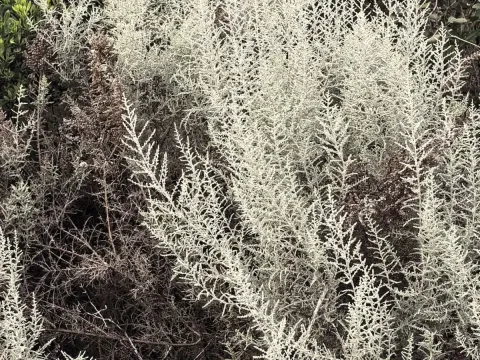
Seriphium
Seriphium
Seriphium is a perennial shrub belonging to the Asteraceae family. Historically related to the Artemisia genus, this plant is known for its extreme resilience in arid and semi-arid regions. It typically colonizes areas with nutrient-poor or rocky soils where other vegetation struggles to establish.
What the section contains

Seriphium
The plant thrives in well-drained, sandy, or gravelly soils that provide minimal water retention. Its deep-reaching root system is an evolutionary adaptation that allows the plant to tap into groundwater reserves, ensuring survival during severe and prolonged drought conditions.
Climate requirements for Seriphium emphasize the need for high levels of solar irradiance. The plant does not tolerate waterlogged conditions or high humidity, as these environments predispose the plant to root rot and other physiological stressors.
Agronomic management of Seriphium usually centers on population control rather than cultivation, as it often acts as an invasive species on grazing lands. Manual clearing or controlled burning is often employed to manage its density and promote the growth of more palatable forage species.
Botanically, Seriphium is defined by its tough, woody stems and small, often pubescent leaves that minimize transpiration. Its ability to reproduce via small, wind-dispersed seeds makes it a prolific colonizer that can rapidly dominate degraded land.
Seriphium faces threats primarily from fungal pathogens during excessively wet seasons. Root rot, caused by stagnant moisture, is the most significant disease affecting the health and longevity of the plant in poorly managed areas.
Common pests include various species of aphids and weevils that target the succulent new growth during the spring flush. While the plant has natural chemical defenses, severe infestations can significantly hinder growth rates and seed production.
Effective pest management involves the removal of overcrowded stands to improve air circulation, which naturally limits the spread of fungal spores. Ensuring adequate spacing is essential to maintaining the vigor of the plant community.
Chemical control remains an option in commercial farming when Seriphium infringes on productive acreage. Selective herbicides are typically applied during the early vegetative stage to prevent the plant from establishing a seed bank in the soil.
Monitoring for signs of stress, such as yellowing leaves or stunted development, is crucial. Early detection of pest or disease outbreaks allows for targeted intervention, reducing the need for broad-spectrum chemical treatments.