
Arnoseris minima
Arnoseris minima (L.) Schweigg. & Körte
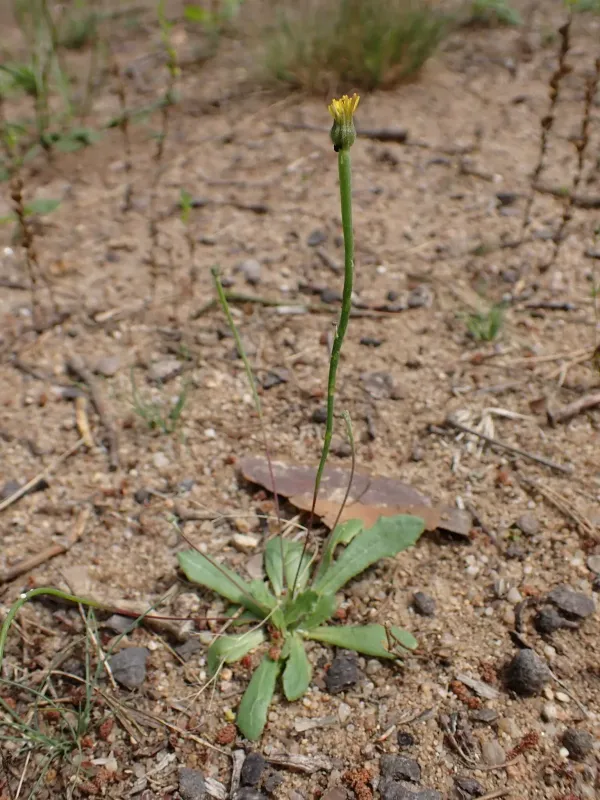
Description
Growing requirements
Arnoseris minima, commonly known as lamb succory, is an annual herbaceous plant belonging to the Asteraceae family. In agriculture, it is strictly considered a weed species, often interfering with the growth of cereal crops in poor soil conditions.
The plant thrives in sandy, acidic, and nutrient-deficient soils. Because of its adaptability to low-fertility environments, it frequently emerges in agricultural areas where soil quality or management practices are insufficient to suppress non-crop vegetation.
The geographical distribution of Arnoseris minima covers much of Europe, particularly the temperate regions. It is highly adapted to cooler, moist springs, which allow the plant to complete its lifecycle before the onset of the heat of summer.
Botanically, it is characterized by a basal rosette of leaves and slender, branched stems topped with small yellow flower heads. Its reproductive strategy relies on the production of a large number of seeds, which can remain dormant in the soil for extended periods.
Effective management involves consistent crop rotation and the use of pre-emergence herbicides. Deep plowing and mechanical cultivation during the early stages of crop development are crucial for preventing the establishment of large populations in the field.
Main diseases and pests
The plant is susceptible to various fungal pathogens, including powdery mildew and rusts, which can occasionally serve as a bridge for diseases to infect nearby crops. Maintaining clean field margins is essential to mitigate these biological risks.
Pests such as aphids and leaf-eating beetles may infest Arnoseris minima. While these insects cause visible damage, the plant's high reproductive rate allows it to withstand significant pest pressure throughout the growing season.