
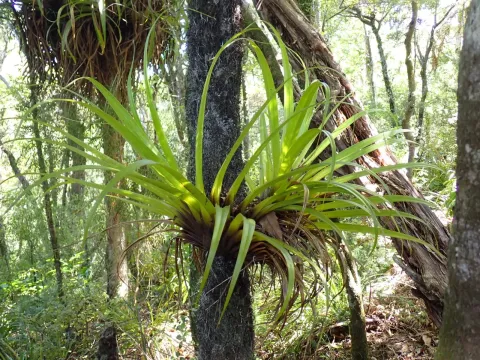
Collospermum hastatum
Collospermum hastatum
Collospermum hastatum is a remarkable epiphytic plant belonging to the Asphodelaceae family. Native to New Zealand, this species is known for its distinctive growth pattern, where it typically anchors itself onto the trunks and branches of large forest trees.
What the section contains
Collospermum hastatum
The natural range of this species covers a significant portion of the New Zealand landscape, extending from coastal areas to subalpine forests. This wide distribution demonstrates the plant's ability to thrive in various microclimates and altitudes.
Botanically, it is characterized by large, arching, sword-shaped leaves arranged in a tight rosette. This structure functions as a biological tank, collecting rainwater and organic debris, which the plant utilizes as a source of water and essential nutrients in its arboreal habitat.
To cultivate Collospermum hastatum successfully, one must replicate its natural epiphytic niche. This requires a substrate that provides excellent drainage and aeration, combined with high ambient humidity and moderate, indirect lighting conditions to prevent leaf scorching.
While not a traditional agricultural crop, the plant serves as a significant specimen in botanical gardens and private ornamental collections. Its architectural form makes it a sought-after species for enthusiasts interested in high-value exotic flora.
The primary threats to the plant's health in cultivation include fungal pathogens caused by water stagnation within the leaf rosette. Proper air circulation is critical to prevent the development of soft rot, which can quickly compromise the plant's structural integrity.
Common pests that may affect this species include scale insects and mealybugs. Regular monitoring of the leaf bases and surfaces is necessary to catch infestations early, and the use of insecticidal soaps is generally effective for management.