
Fatshedera lizei
Schefflera arboricola x Fatsia japonica
Description
Growing requirements
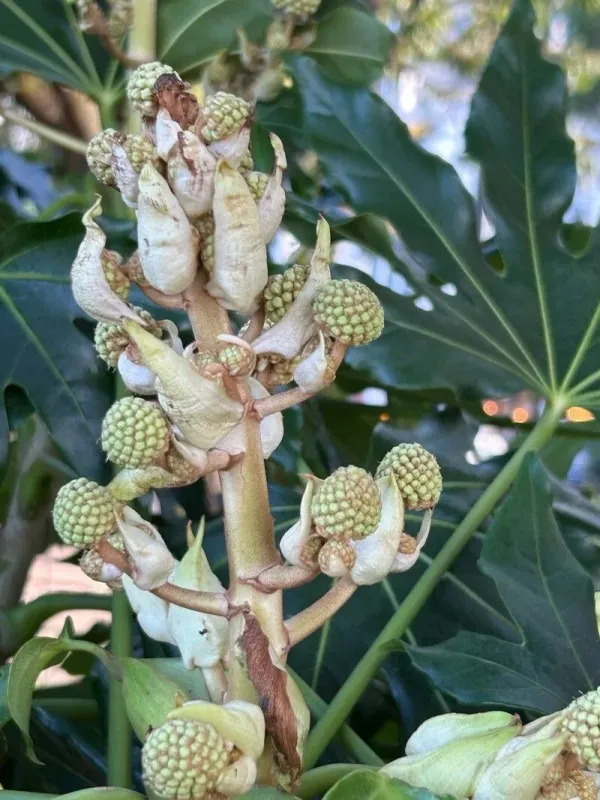
Fatshedera lizei is a unique intergeneric hybrid between Fatsia japonica and Hedera helix. Belonging to the Araliaceae family, this evergreen shrub inherits the impressive foliage of the Fatsia and the vining, flexible habit of the Ivy.
The plant thrives in cool to moderate environments. Ideally, it prefers temperatures between 15°C and 18°C during the day, with a significant drop in temperature during the winter months, which supports its natural growth cycle.
Regarding soil requirements, the culture needs a well-draining, humus-rich substrate. A standard mix for indoor Araliaceae usually consists of leaf mold, peat, and coarse sand to prevent compaction and ensure root aeration.
Light exposure should be bright but indirect. While it can tolerate some shade, too little light causes the plant to become leggy and lose its vigor. Direct harsh sunlight, conversely, is detrimental and will scorch the leaves.
Water management is vital; the plant requires consistent moisture but should never be left sitting in water. In winter, as growth slows down, irrigation must be significantly reduced to prevent root rotting and stress.
Main diseases and pests
Spider mites are the most common pest for this hybrid, particularly in indoor environments with low humidity. They thrive on the underside of the leaves and can cause yellowing and webbing.
Mealybugs and scale insects also pose a threat to the plant's health. Early detection is key, and infestations can often be controlled by using cotton swabs dipped in alcohol or applying suitable systemic insecticides.
Root rot is the most frequent pathological problem, typically caused by overwatering or poor drainage. Infected plants show signs of wilting and browning leaf edges despite moist soil.
Leaf spot diseases can occur if the foliage is kept wet for too long in poorly ventilated areas. Maintaining good airflow is essential to keep the leaves dry and healthy throughout the year.
If the plant exhibits stunted growth or deformed leaves, check for insect damage or nutrient deficiencies. Re-potting into fresh soil and adjusting the fertilizing schedule usually restores the plant's health.