
Rhaphidophora decursiva
Rhaphidophora decursiva (Roxb.) Schott
Description
Growing requirements
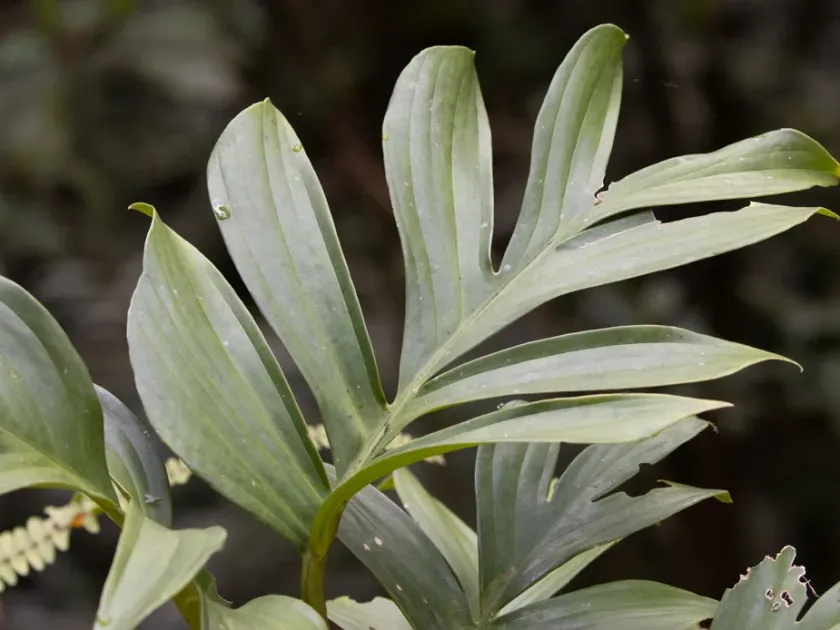
Rhaphidophora decursiva is a robust, evergreen perennial vine belonging to the Araceae family. Characterized by its impressive, deeply pinnate leaves, this plant is highly prized in horticulture for its rapid growth and striking architectural appearance.
The plant is native to the tropical forests of Asia, ranging from India to China and Southeast Asia. In its natural habitat, it functions as an epiphyte, using its aerial roots to ascend large forest trees in search of filtered light within the canopy.
Successful cultivation requires high ambient humidity and temperatures consistently between 20°C and 28°C. Providing a structure for vertical growth, such as a moss pole, is essential to mimic its natural environment and encourage the maturation of its foliage.
The growing medium should be coarse, well-draining, and rich in organic matter. A mixture of orchid bark, perlite, sphagnum moss, and charcoal is often recommended to prevent compaction and provide the necessary oxygenation for the root system.
Regular maintenance involves light misting or using a humidifier to maintain humidity levels above 60%. Watering should be performed when the top layer of the substrate begins to dry, ensuring the pot has adequate drainage holes to avoid water accumulation.
Main diseases and pests
Common pests that affect this crop include mealybugs, spider mites, and scale insects. These pests thrive in indoor conditions with poor ventilation or low humidity, necessitating routine inspections of the underside of the leaves and stems.
Root rot, primarily caused by excessive soil moisture and insufficient aeration, represents the most significant phytosanitary threat. Maintaining a proper watering frequency and using a sterile, well-draining substrate are the best preventive measures against fungal pathogens.