
Rhaphidophora tetrasperma
Rhaphidophora tetrasperma Hook. f.
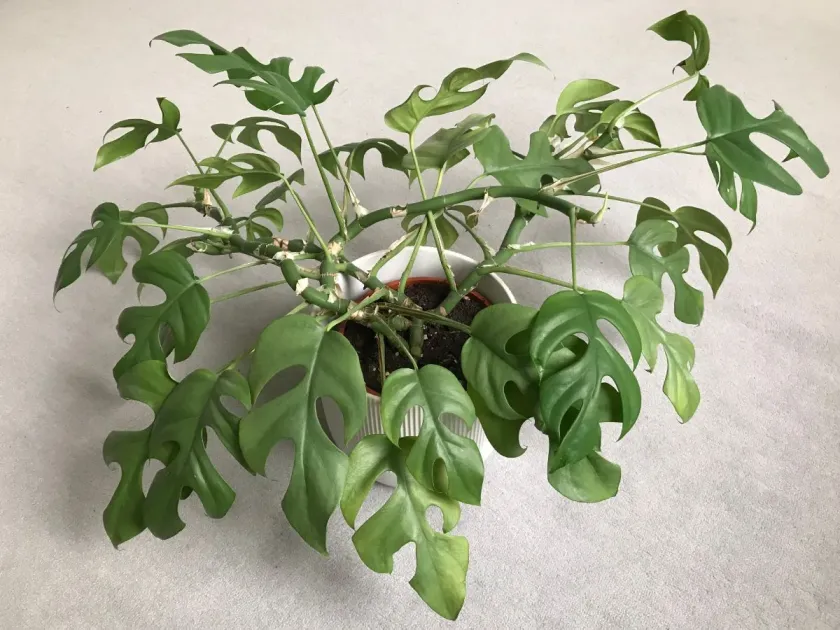
Description
Growing requirements
Rhaphidophora tetrasperma is a member of the Araceae family, native to the tropical forests of Southeast Asia, specifically Thailand and Malaysia.
This climbing plant requires bright, indirect light to thrive, as direct sunlight can scorched its iconic fenestrated foliage while deep shade slows down its growth rate.
The plant performs best in temperatures ranging between 18 and 28 degrees Celsius, requiring a stable tropical-like environment to maintain its health.
High humidity levels, ideally above 60 percent, are crucial for the development of new leaves and for preventing the browning of leaf edges typical of this species.
A well-draining, airy potting medium, such as a blend of peat moss, perlite, and orchid bark, is essential to ensure proper root aeration and prevent waterlogging.
Main diseases and pests
Spider mites are the most common pests for this plant, appearing particularly in dry indoor environments and causing discoloration and webbing on the foliage.
Root rot is the primary physiological threat, usually caused by overwatering or using a heavy, non-porous potting substrate that retains too much moisture.
Scale insects and mealybugs can also infest the stems and undersides of leaves, necessitating regular inspection to catch infestations at an early stage.
Maintaining proper hygiene by wiping the leaves and avoiding overcrowded conditions can significantly reduce the likelihood of pest outbreaks and fungal spread.
If chemical intervention is needed, the use of neem oil or horticultural soaps is generally effective for controlling common pests while keeping the plant safe.