
Dead Horse Arum Lily
Helicodiceros muscivorus
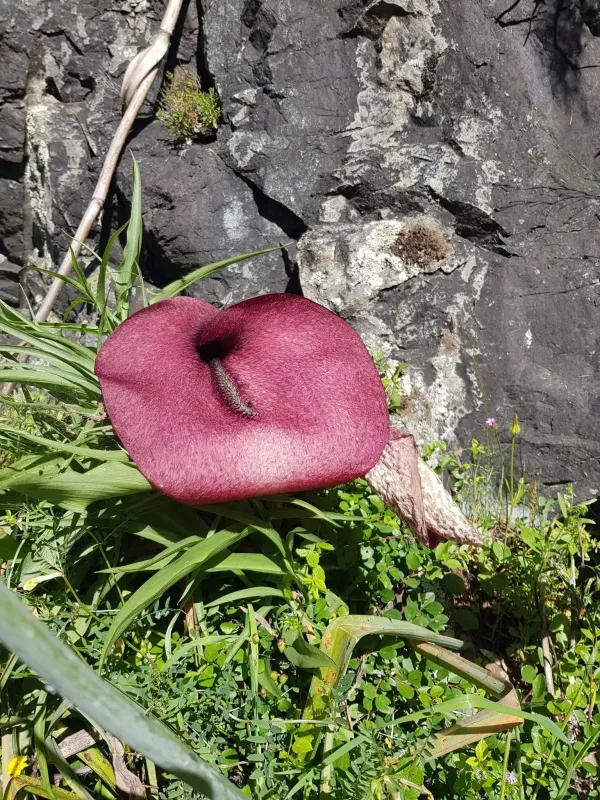
Description
Growing requirements
The Dead Horse Arum Lily (Helicodiceros muscivorus) is a fascinating member of the Araceae family. This geophytic perennial is indigenous to the Mediterranean regions, specifically Corsica, Sardinia, and the Balearic Islands, where it thrives in rocky, well-drained soils.
Successful cultivation requires mimicking its native Mediterranean habitat. It demands a frost-free environment, making it a plant suitable for greenhouses or conservatories in temperate latitudes. It cannot withstand freezing temperatures, which can severely damage its delicate tubers.
Soil requirements are strict: the substrate must be highly porous and well-draining. A mix consisting of organic matter, coarse sand, and perlite is ideal to prevent moisture stagnation, as the tubers are highly susceptible to rot during the dormant season.
The plant requires moderate to bright indirect sunlight. Full afternoon sun, especially in hot climates, can dehydrate the broad leaves and cause necrotic spots, so providing partial shade is recommended for optimal leaf development and overall health.
Watering practices should be adjusted according to the plant's seasonal cycle. During the growing phase, the soil should be kept evenly moist but never waterlogged. As the foliage begins to senesce, irrigation must be reduced to initiate the necessary period of dormancy.
Main diseases and pests
Pathogen risks are primarily concentrated on fungal diseases. Excessive soil moisture combined with poor air circulation often triggers soft rot of the tuber, which is frequently lethal to the plant. Improving drainage and aeration is the most effective preventative measure.
In indoor or greenhouse environments, pests such as spider mites, aphids, and mealybugs can pose a threat to the succulent leaves. Monitoring for early signs of infestation and maintaining proper hygiene within the cultivation area are essential for plant health management.