
Holly-leaved eryngo
Eryngium ilicifolium
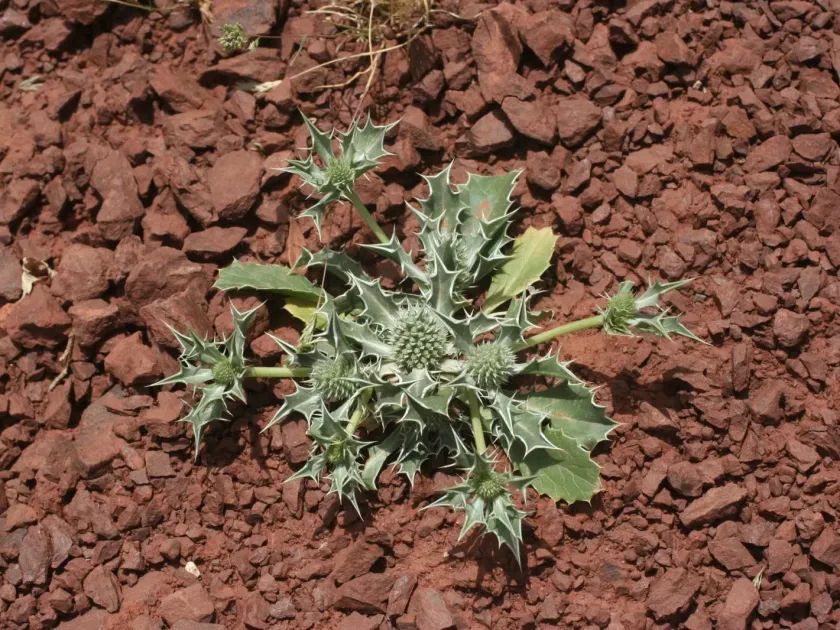
Description
Sowing dates
Holly-leaved eryngo (Eryngium ilicifolium) is a member of the Apiaceae family. This perennial herb requires specific conditions for successful establishment from seeds.
The optimal sowing time is early spring when soil temperatures reach 10–12°C. Autumn sowing is also an option, as the seeds often benefit from natural stratification during winter months.
Seeds should be sown at a depth of 1–2 cm. Proper soil moisture must be maintained throughout the germination period, which usually lasts 2–3 weeks depending on environmental conditions.
Once seedlings emerge, they should be thinned to a spacing of 30–40 cm. Proper spacing ensures that each plant has enough room to develop a deep taproot and a strong basal rosette.
For large-scale cultivation, row planting with 45–60 cm between rows is recommended. This setup facilitates mechanical weeding and ensures adequate air circulation around the plants.
Growing requirements
As a xerophytic plant, Holly-leaved eryngo is naturally adapted to the hot and dry climates of the Mediterranean region. It is highly drought-tolerant once established.
The crop requires well-drained, sandy, or rocky soils. Waterlogging is the primary enemy of this species, as it rapidly leads to root rot and mortality in poorly drained patches.
Full sun is mandatory for healthy development. Shady conditions cause the plants to grow leggy, reduce their vigour, and negatively affect the secondary metabolites in their tissues.
Neutral to slightly alkaline soil pH is preferred. In acidic conditions, the application of lime is necessary to improve plant health and nutrient uptake efficiency during the growing season.
Nutrient management focuses on moderate fertilization. Excessive nitrogen application should be avoided as it stimulates leafy growth at the expense of root development and general stress resilience.
Main diseases and pests
Fungal diseases are the most common threats to this crop, particularly under conditions of high humidity or poor soil drainage. Powdery mildew is frequently observed on the foliage.
Leaf spot diseases and alternaria blight can occur if the humidity levels remain consistently high. Preventive measures include ensuring good spacing and removing debris from the field.
Pests such as aphids and spider mites can attack the plants during hot, dry spells. These pests reduce plant vitality and can significantly lower the quality of the harvested material.
Soil-borne pests like wireworms may occasionally damage the root system. Pre-planting soil treatment is recommended if a high population density of soil pests is suspected.
Integrated Pest Management (IPM) is the best approach to control these threats. Using biological or chemical controls should be done in compliance with local regulations and pre-harvest intervals.