
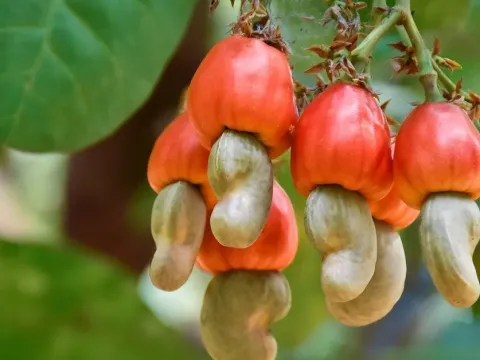
Anacardium occidentale
Anacardium
Anacardium occidentale, known as the cashew tree, is a tropical evergreen belonging to the Anacardiaceae family. In commercial plantations, propagation is primarily conducted via seeds or through grafting to ensure the consistency of desirable genetic traits.
What the section contains


Anacardium occidentale
Seeds are typically sown in prepared containers using well-draining soil mixtures. Planting is ideally timed with the onset of the rainy season, which provides the necessary hydration for seedlings to establish robust root systems.
Prior to sowing, soaking seeds is recommended to improve germination rates. Maintaining a consistent temperature range between 25 and 30 degrees Celsius is critical, as seedlings are sensitive to cold and thermal fluctuations.
Field preparation involves deep plowing and weed suppression to ensure minimal competition. Depending on the farming system, planting densities usually range from 100 to 150 trees per hectare, allowing enough space for crown development.
Young trees require diligent care during their first two years. Protection from harsh sunlight and maintaining optimal soil moisture levels are essential for developing strong, resilient trunks in the early growth stages.
As a tropical species, the cashew tree has strict climatic requirements. It does not tolerate frost, restricting its commercial cultivation to tropical regions where temperatures remain consistently high throughout the year.
The plant thrives in full sunlight, as shade negatively impacts photosynthetic efficiency and overall fruit yield. While adaptable to various soil types, it performs best in well-drained sandy loams with a pH between 5.5 and 6.5.
Water management is crucial; although mature trees are drought-tolerant, they cannot survive in waterlogged soil. Proper drainage systems are essential to prevent root rot, especially in areas with high seasonal rainfall.
Relative humidity needs to be monitored during the flowering stage, as excessively damp conditions can encourage fungal development in inflorescences. Irrigation should be prioritized only during dry spells or in the establishment phase.
Its deep taproot system provides significant drought tolerance, allowing the tree to extract moisture from deeper soil layers. This adaptation makes it a viable crop for regions with extended dry seasons.
Fruit production typically commences three to four years after planting, with full commercial yields usually achieved by the seventh or eighth year. Productivity continues for several decades if trees are well-maintained.
Individual tree yield varies based on genetics and agronomic inputs, ranging from 5 to 15 kilograms of nuts per season. High-intensity orchards may see increased production through the use of specialized fertilizers and pruning.
The fruit consists of an edible "cashew apple" and the true fruit, which is the nut encased in a hard shell. Because the nut holds the primary market value, processing focus is centered on its harvest and safety-conscious extraction.
Annual crown pruning is vital for maximizing sunlight penetration to the developing fruit and facilitating easier manual harvesting. This management practice also assists in reducing pest infestations within dense foliage.
Global market demands focus on processed, shelled, and roasted kernels. Post-harvest processing includes rigorous heat treatment to neutralize caustic oils found in the outer nut shell.
Anthracnose is a primary concern for growers, as it can severely damage shoots and blossoms. Regular sanitary pruning and the application of appropriate fungicides are necessary to mitigate its impact on harvest yields.
Pests such as nut borers and various beetles frequently target developing fruits. Integrated Pest Management (IPM) strategies are widely used to maintain healthy tree populations and prevent significant economic loss.
Root fungal infections represent a silent threat often triggered by poor drainage or overwatering. These conditions can lead to sudden tree decline, making soil health management a priority for all plantations.
Stem borers can cause physical damage to the wood, weakening the tree's structure and making it susceptible to wind damage. Regular inspection of the trunk and bark is required to identify and treat early infestations.
- Anthracnose
- Nut borer
- Root rot
- Stem borers
- Spider mites
Harvesting begins once the cashew apples reach physiological maturity, indicated by specific color changes and aroma. Fruits often drop naturally to the ground, where they are collected manually.
Timely collection is essential to prevent fruit spoilage in hot, humid climates. Once gathered, the nuts are quickly separated from the apples to ensure quality and prevent moisture absorption.
Sun-drying the nuts immediately after separation is a critical step to reduce internal moisture levels. This prevents mold and mycotoxin development, ensuring the product meets international storage standards.
Processing involves shelling, which is hazardous due to the corrosive nature of the shell oil. Mechanized systems are employed in professional facilities to handle the shells safely and efficiently.
Final grading and packaging determine the premium quality of the product. A top-grade cashew kernel is characterized by its creamy color, firm texture, and distinctively rich, buttery flavor.