
Maireana sedifolia
Maireana sedifolia (F. Muell.) Paul G. Wilson
Description
Sowing dates
Sowing of Maireana sedifolia in natural conditions typically occurs via self-seeding during periods of sufficient rainfall. For artificial restoration of rangelands, seeds are sown into a prepared, lightly loosened soil layer to ensure proper seed-to-soil contact.
The optimal time for sowing is autumn or early spring, when soil temperatures allow seeds to undergo the necessary stratification process. The seeds exhibit high germination rates under temperature conditions close to 20–25 degrees Celsius.
When cultivating, it is important to note that surface sowing yields the best results as the seeds are sensitive to deep burial. It is recommended to use specialized seeders for small-seeded crops to ensure uniform distribution across the field.
The germination process requires stable moisture during the first few weeks after sowing, so seeding is often timed to coincide with predicted seasonal rainfall. Once established, the plant begins to actively develop its deep root system.
Seed density is a critical aspect, which should be kept moderate to avoid competition among young plants for limited soil moisture. Sparse planting allows each bush to fully realize its vegetative growth potential.
Growing requirements
Maireana sedifolia is a typical xerophytic halophyte of the Amaranthaceae family, adapted to life in the extremely dry and saline conditions of Australian semi-deserts. It is characterized by exceptional resistance to water scarcity.
The crop prefers alkaline and loamy soils with high salt content, where most traditional forage species cannot survive. It effectively extracts moisture from deep soil layers thanks to a powerful taproot system.
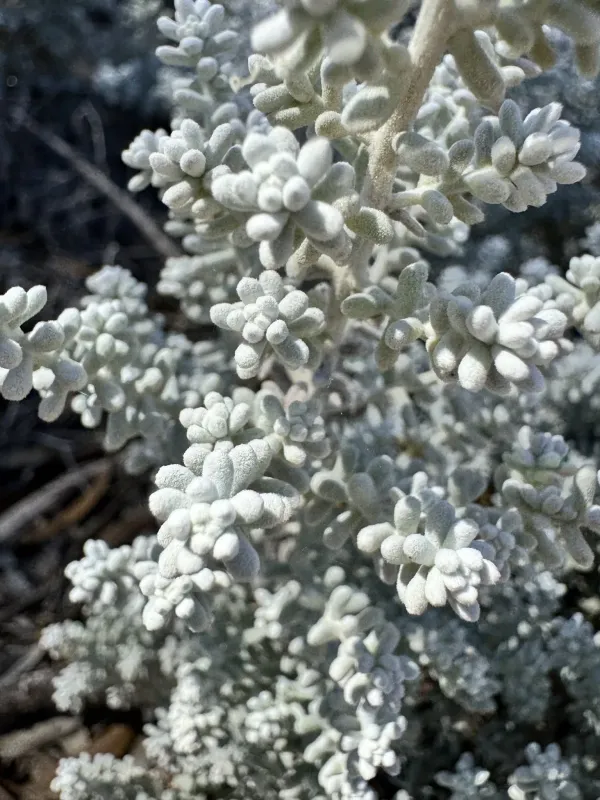
The plant possesses a distinctive greyish hue of the leaves, caused by dense pubescence that protects the tissue from overheating and excessive transpiration. This biological feature makes it indispensable in regions with high solar radiation.
Climatic requirements include the need for high summer temperatures and mild winters, while the crop is capable of surviving short-term frost without significant damage to its vegetative mass.
In terms of agricultural management, it is important to minimize mechanical soil disturbance, as the root system is sensitive to damage, and the structure of soils in arid zones is easily destroyed by tillage.
Yield
The productivity of Maireana sedifolia as a forage crop is evaluated not by green mass yield, but by its ability to maintain stable biomass during severe droughts when other species perish.
Under grazing conditions, it provides livestock with a valuable source of nutrients and minerals contained in the leaves and young shoots even during the summer. This makes it an essential reserve component of the rangeland.
Yield depends heavily on the population density per hectare and annual rainfall distribution. With proper grazing management, the shrub is capable of rapid recovery after being browsed by livestock.
Economic use is limited to regulated grazing to prevent bush depletion. Excessive grazing pressure on the crop leads to root system degradation and reduced plant longevity.
To optimize seed harvesting, manual methods or specialized vacuum harvesting machinery are used, as the seeds have a tendency to shed upon full maturity in dry conditions.
Main diseases and pests
The main threats to the stands are not diseases, but unregulated overgrazing, which depletes nutrient reserves in the roots and leads to the death of the shrubs.
Typical pests include phytophagous insects, such as larvae of various Lepidoptera, which may damage young foliage during periods of active plant growth in the spring.
Fungal diseases are rare and usually associated with abnormally wet periods, which lead to root rot due to waterlogging, an environment to which the species is not adapted.
Wildfires pose a serious danger, as despite the presence of pubescence, the shoots contain components that support combustion in arid desert conditions.
Invasive weeds can also suppress the development of Maireana sedifolia in the early stages of life by consuming scarce water resources, making weed control in the first year critical.