
Deeringia amaranthoides
Deeringia amaranthoides
Description
Growing requirements
Deeringia amaranthoides is a perennial subshrub or scandent vine belonging to the Amaranthaceae family. Naturally found in the tropical regions of Asia, India, and Australia, this plant is valued for its versatility and its ability to thrive in various forest edge habitats.
The plant requires a warm, humid climate to reach its full development potential. It prefers rich, well-draining soils with a slightly acidic to neutral pH. Due to its tropical origins, it cannot tolerate frost, and therefore, in colder temperate zones, it must be grown in greenhouses or as a seasonal pot plant to protect it from thermal stress.
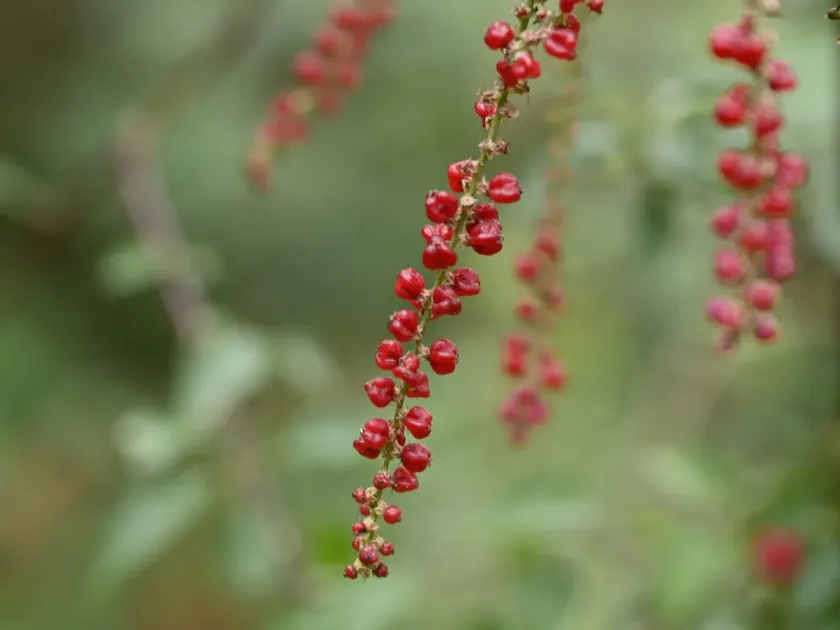
Its botanical structure includes elongated stems that act as vines, climbing over other vegetation or supports in its native habitat. The leaves are ovate to elliptic, and the small, inconspicuous flowers eventually develop into vibrant, bright red berries, which are characteristic of the genus and provide distinct ornamental value.
In terms of хозяйственное (economic) utility, this species is frequently used in traditional medicine for its anti-inflammatory properties. Furthermore, in various Asian cultures, the tender leaves and young shoots are gathered and cooked as a green vegetable, offering a specific nutritional profile that makes it a useful local crop.
Agrotechnical care revolves around providing adequate vertical support for the climbing stems. Consistent irrigation is required during the growing season, but the substrate must allow for quick water drainage to prevent stagnant moisture, which is the primary cause of stress in cultivated specimens.
Main diseases and pests
Common threats to Deeringia amaranthoides include fungal pathogens such as powdery mildew and various leaf spot diseases, which typically appear when air circulation is poor. Ensuring proper spacing and airflow between plants is essential for maintaining a healthy crop throughout the growth cycle.
Insect pests such as aphids and spider mites are the most common concern in controlled environments. Integrated pest management strategies, focusing on regular monitoring and the use of insecticidal soaps, are recommended to maintain plant health and avoid the need for harsh chemicals.