
Chamissoa altissima
Chamissoa altissima
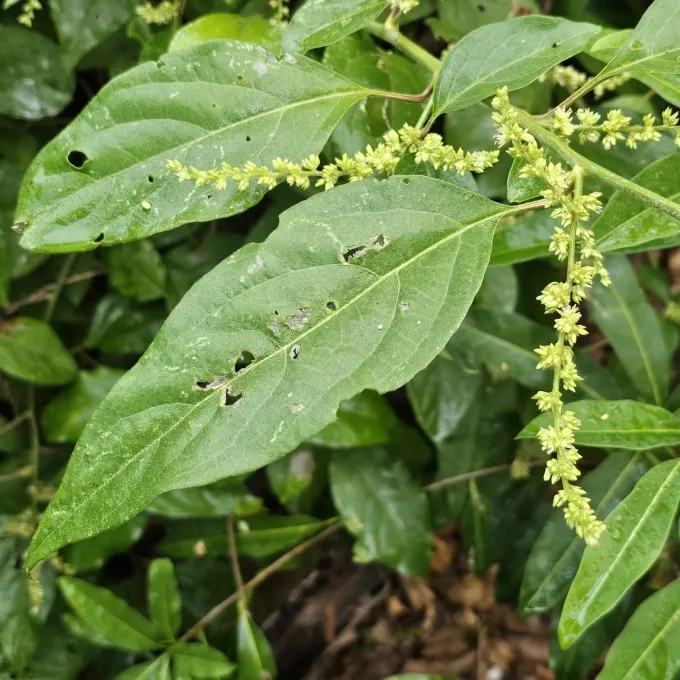
Description
Growing requirements
Chamissoa altissima is a perennial climbing plant belonging to the Amaranthaceae family. It is recognized for its woody stem base and sprawling growth habit, which allows it to thrive in diverse tropical and subtropical environments ranging from forest edges to disturbed sites.
The native range of this species is extensive across the Americas, stretching from Mexico and the Caribbean down to the tropical regions of South America. Its ability to colonize various habitats makes it a versatile species in its native range.
Successful cultivation requires soil that is rich in organic matter and maintains excellent drainage. While the plant can tolerate partial shade, it achieves the most robust growth when exposed to bright, indirect sunlight and consistent ambient temperatures throughout the year.
Agronomic management involves providing adequate support for the plant to climb, as its natural inclination is to use other vegetation as a scaffold. Regular pruning is recommended to manage its rapid vegetative expansion and to improve air circulation within the canopy.
From a хозяйственное standpoint, the plant is primarily utilized for its leafy greens, which are consumed after cooking to neutralize potential oxalates. Additionally, it has a history of traditional use in local herbal medicine for treating minor ailments, although such uses should be approached with caution.
Main diseases and pests
The most significant threats to Chamissoa altissima include fungal pathogens such as powdery mildew, which often develop in environments with high humidity and poor ventilation. Keeping the growing area clean and properly ventilated is essential for disease prevention.
Aphids represent a major pest risk, frequently colonizing the tender young shoots. Their feeding activity not only weakens the plant but also facilitates the transmission of viral pathogens, which can cause significant stunted growth or chlorosis.
Root rot is a common issue when the plant is grown in overly saturated soils. To avoid this, it is critical to ensure that the potting mix or field soil has enough aeration and that irrigation cycles are adjusted based on the plant's moisture requirements.
Mites can become problematic in dry conditions, especially when plants are grown under cover or in greenhouse environments. Periodic rinsing of the foliage with water can help dislodge these pests before they establish large colonies on the leaves.
Integrated Pest Management (IPM) strategies are highly recommended for this crop. Utilizing predatory insects and avoiding excessive chemical interventions helps maintain the plant’s health while ensuring that its foliage remains safe for any intended consumption or medicinal usage.